

Since 2004, the Anglican Church’s Adult Literacy Program has been helping individuals past school age, learn how to read and write but still face challenges to this day.
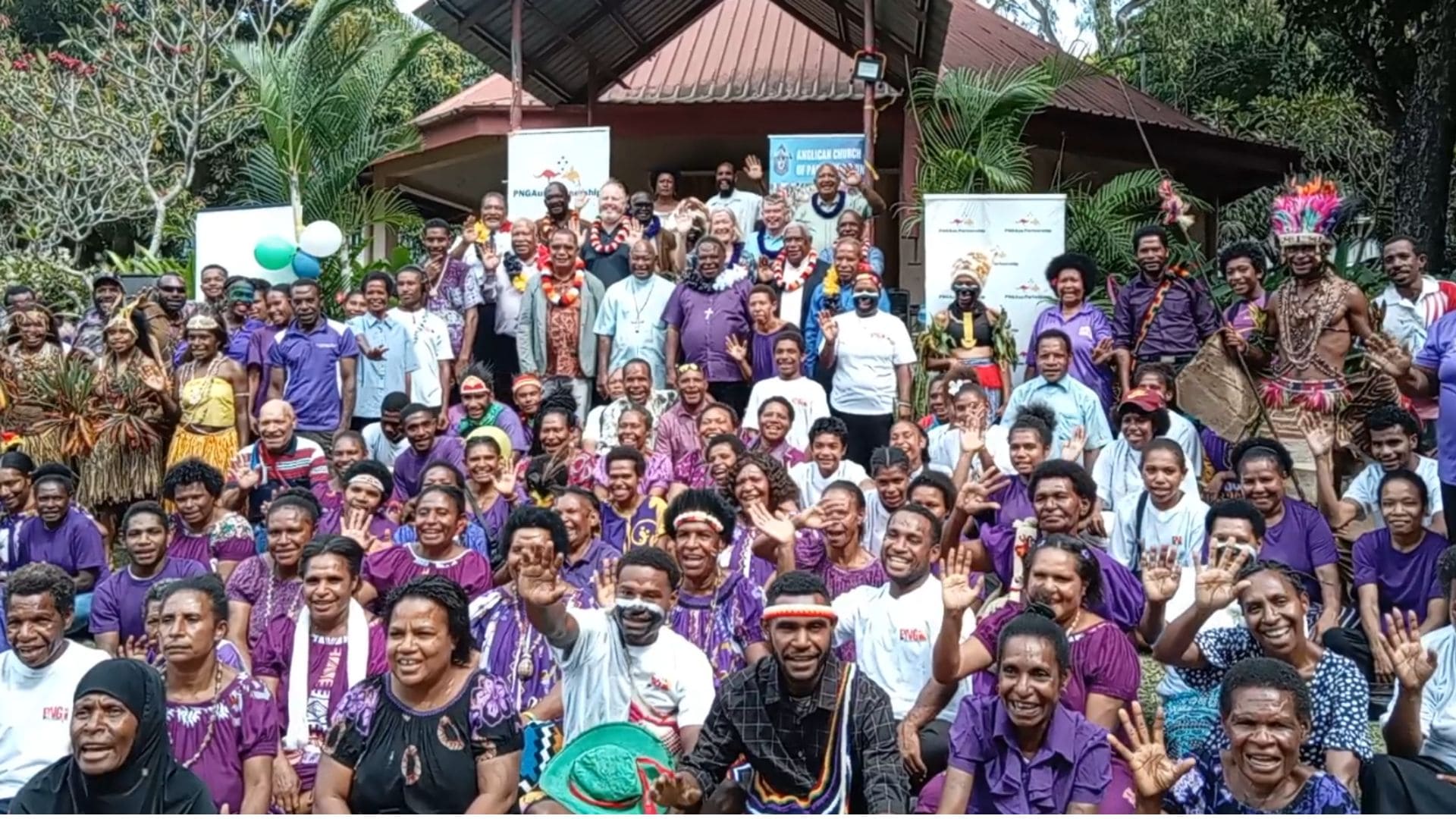
Recently, church leaders from PNG and Australia gathered at Begabari, North Waigani in Port Moresby city to see how churches were helping communities.
Church Partnership Program Coordinator George Michael Ambo said the Anglican Church’s literacy program began with a two-year curriculum but faced challenges in monitoring and sustaining schools across the country.
Mr. Ambo said the program initially operated about 152 schools, many in remote areas, making monitoring difficult due to geographical challenges.
“In 2014 to 2016, we tried to shift the way we do things by coming up with the Empowering Melanesian Adult Literacy curriculum, but that still did not work.”
Through a partnership with the Building Community Engagement Program (BICEP), the Anglican Church later developed a new nine-month curriculum focused on basic literacy, post-literacy, and functional literacy.
Mr. Ambo said the revised curriculum equips learners with reading and writing skills while also preparing them for employment or re-entry into formal education through Flexible Open and Distance Education (FODE) or TVET.
“We’re getting learners to actually learn how to read and write and find employment after nine months or go back to formal education as well.”
The literacy schools also provide small and medium enterprise (SME) training and partner with the Department of Agriculture and Livestock to introduce smart agriculture projects in rural communities.
The functional literacy component includes lessons on nutrition, climate change, and identifying suitable cash crops that can generate income for households and communities.
Mr. Ambo said the program is inclusive and caters for people with disabilities, women, and vulnerable groups.
“Our curriculum is inclusive. We have disability-inclusive lessons, and we also focus on vulnerable and marginalized populations, especially women and young girls.”
He acknowledged that infrastructure remains a challenge, particularly in urban settings, as many centres are not yet fully accessible for people with disabilities.
The Anglican Church is now planning improvements under the next phase of the Church Partnership Program to make facilities more inclusive.
Volunteer teachers are recruited from Grade 10 and Grade 12 graduates and undergo two weeks of training through the National Literacy Awareness Secretariat before being certified to teach.
Mr. Ambo said the Anglican Church is also working closely with the National Department of Education to support the development of a national literacy policy, which is expected to be launched during Literacy Week in September in Popondetta, Oro Province.
The program currently operates nine literacy schools nationwide, including three in Port Moresby, five in Oro Province with plans to expand further.
Mr. Ambo said learner retention and sustaining teachers remain major challenges, particularly because many schools rely on donor funding.
To address this, the program has introduced economic empowerment projects in communities to help sustain schools and teachers.
One successful example is in Katima, Oro Province, where literacy learners have been trained in cocoa farming, rice farming, poultry, and piggery projects through partnerships with the Department of Agriculture and Livestock.
The urban literacy schools charge a fee of K150 per learner, payable in instalments over nine months, while most rural centres provide free education services.
Graduates receive recognized certificates signed by the National Literacy Awareness Secretariat, the program coordinator, and Anglican bishops, allowing some learners to continue into formal education pathways.
Mr. Ambo said the literacy program has already produced many success stories, with former learners progressing into Grades 8 to 11 and others finding employment opportunities.