

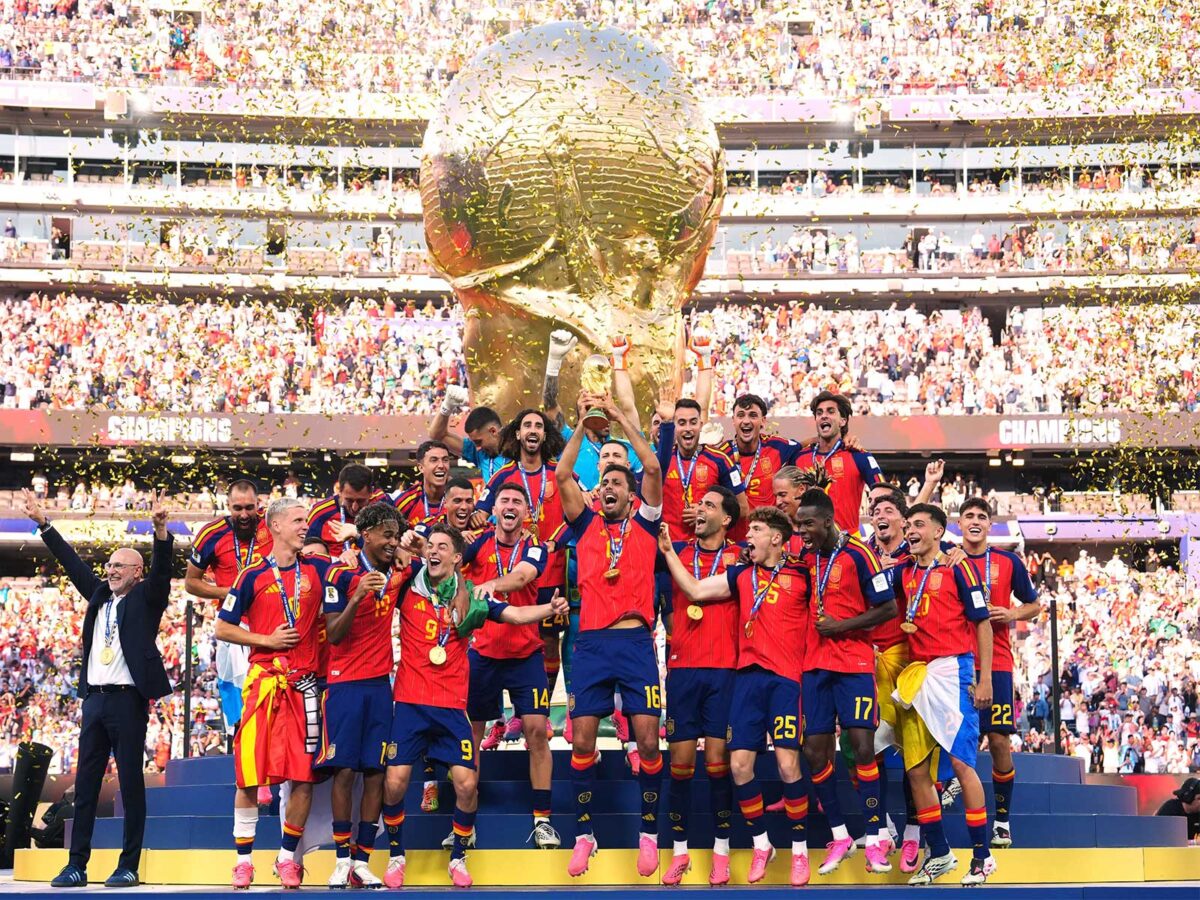
The 2026 FIFA World Cup will be remembered as a tournament that redefined football's biggest stage. Hosted jointly by the United States, Canada and Mexico, it was the first World Cup to feature 48 teams, expanding the competition and giving more nations than ever before the chance to compete on football's grandest stage.
From the opening whistle, the month-long tournament delivered drama, surprise and unforgettable moments. Traditional football powers were pushed to their limits by emerging nations, while several debutants proved they belonged among the world's elite. The expanded format created new storylines, packed stadiums and a festival atmosphere across North America.
Spain arrived at the tournament among the favourites, having entered as reigning European champions under coach Luis de la Fuente. Their campaign, however, did not begin smoothly, as they were held to a goalless draw by World Cup debutants Cabo Verde. That early stumble quickly became a wake-up call. Victories over Saudi Arabia and Uruguay secured Spain's place in the knockout stage and restored confidence within the squad.
Once the knockout rounds began, Spain emerged as the tournament's standout team. They dismantled Austria 3-0 in the Round of 32 before edging neighbours Portugal 1-0 in a tense Iberian derby. A hard-fought 2-1 victory over Belgium followed in the quarter-finals before Spain produced one of their finest performances to defeat France 2-0 and book a place in the final. Throughout the tournament, Spain's disciplined defence and patient, possession-based football made them one of the most complete teams in the competition.
Waiting for them in the final at MetLife Stadium in New Jersey was defending champion Argentina, led by Lionel Messi in what was widely expected to be his final World Cup appearance. More than 80,000 fans packed the stadium as millions around the world watched two football giants battle for the sport's greatest prize.
The final was a tense tactical contest. Spain dominated possession and created numerous chances, but Argentina's defence, led by goalkeeper Emiliano Martínez, kept the scores level throughout regulation time. The breakthrough finally arrived in the 106th minute of extra time when Ferran Torres capitalised on a loose ball inside the penalty area to score the only goal of the match. Spain held firm to secure a 1-0 victory and claim their second FIFA World Cup title, 16 years after their maiden triumph in South Africa in 2010.
Spain's triumph was built on teamwork rather than individual brilliance. Midfield captain Rodri marshalled the side with authority, while the youthful flair of Lamine Yamal, Nico Williams and Pedri complemented the experience of the squad. Defensively, Spain were outstanding, conceding just one goal throughout the tournament—setting a new benchmark for a World Cup-winning team.
For Argentina, the defeat marked a heartbreaking end to their title defence and likely the final World Cup appearance of Lionel Messi. Despite falling short of back-to-back championships, Messi left the global stage as one of the greatest players in football history, having inspired Argentina to World Cup glory in 2022.
As captain Rodri lifted the FIFA World Cup trophy amid celebrations in New Jersey, Spain completed a remarkable campaign that showcased discipline, tactical excellence and resilience. Their victory not only crowned them champions of the expanded 48-team tournament but also confirmed the return of La Roja as football's dominant force on the world stage