

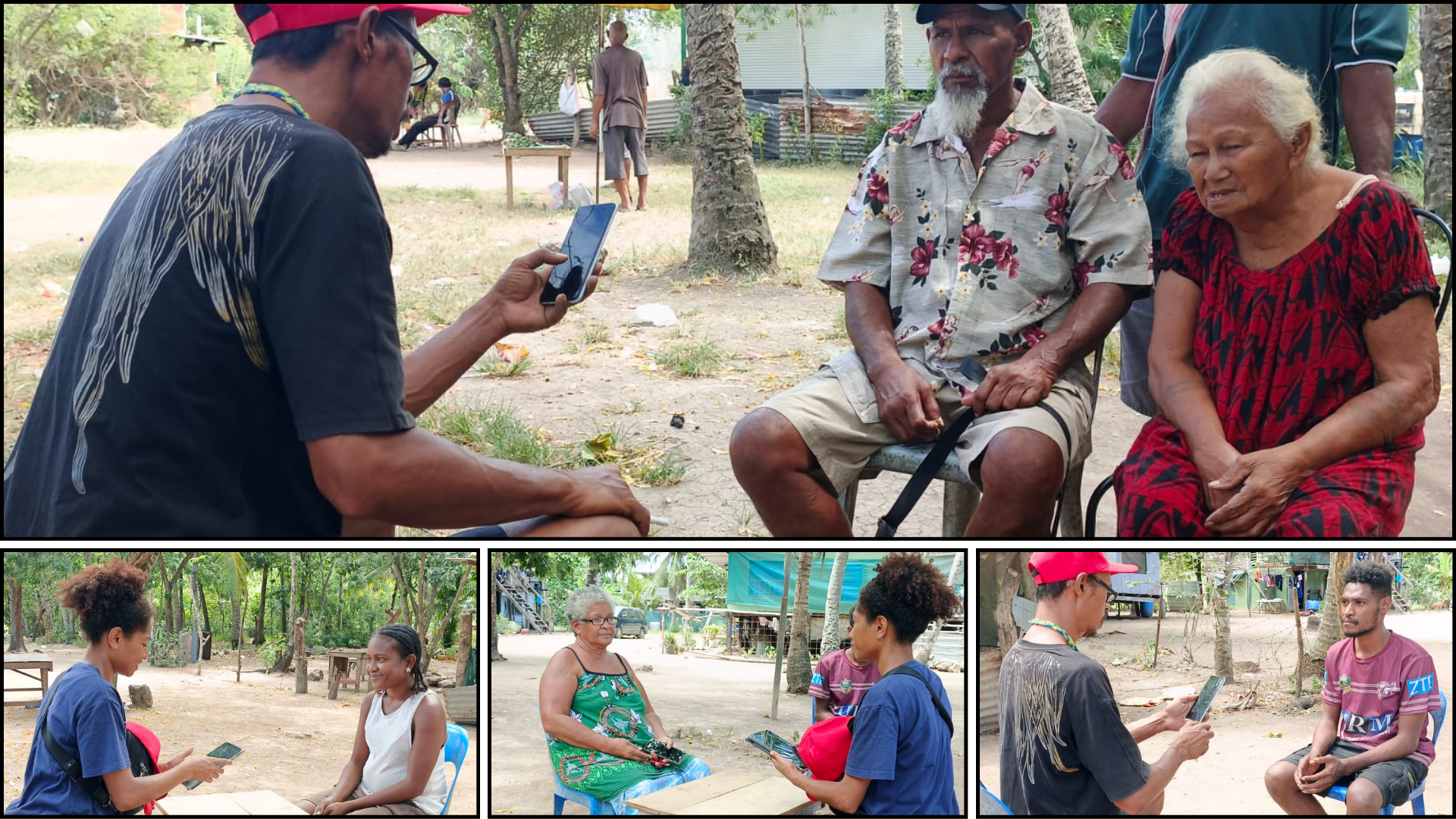
Gabagaba village in Central Province recently completed the first successful Mini Paperless Census exercise as part of a community engagement program.
Initiated through Ward Member Peter Malabag, the project was launched in partnership with JS Pro Trainers & Consultants, a local business specializing in corporate training and data management
This partnership combines expertise in Digital Solutions, Local Governance, and Community Engagement to replace traditional paper methods with an efficient Digital System.
The six-week exercise was carried out by the Managing Director and Owner of JS Pro Mr. James Sabadi along with his team of trained Enumerators, and Gabagaba Ward Recorder Mr. Douglas Hare.
Together, they implemented a secure digital platform for real-time data entry and reporting, ensuring accuracy and efficiency throughout the census process.
The Digital Census gathered detailed data on education, employment status, income and social economic challenges, transforming the census into a broader feasibility study that provides valuable insights into the community’s living conditions.
According to Mr. Sabadi, he reached out to National Statistical Office (NSO) prior to taking on this census exercise, with a preposition for a partnership to trial the paperless census exercise, but he never got a response.
Seeing the importance of such an exercise, he took it upon himself and reached out to Gabagaba Ward Member Mr. Malabag.
“When we heard about NSO coming up with a digital idea in 2024, I was thinking, I could actually get myself involved in this area,” said Mr. Sabadi.
“I was hoping to partner with them and assist them in this area. Eventually everything did not go well, and it all went quiet for some time, so I came up with the idea that I could do something on my own and show them that it can be done properly from a mini scale.”
He is now calling on NSO and other government authorities responsible for the national census, to forge partnerships with local PNG owned digital business to enhance the work of census in the country.
“Digital census is way better and the way forward. I just hope the government bodies responsible for this matter get onboard with what we’re doing now, because digital census is simple and far better.”
To prepare for the rollout, JS Pro took in volunteers and put them through Enumerator Training, equipped with the knowledge and skill to record data and do correct entry into the digital system via an Offline Digital Application that was used by JS Pro.
Mr. Sabadi noted that the digital census is very useful and very accurate in gathering data and information of a person or household information, allowing them to collect data from an infant to the most elderly person living in Gabagaba village.
The paperless census was very effective and very essential, especially for the household exercise conducted. Every member in a household was counted for and registered.
Even when individuals were unavailable because they were away at work, out fishing or gardening, the team ensured they were not missed.
Enumerators sent the necessary forms directly to them via WhatsApp, which the residents filled out and returned. The team then filtered and uploaded the details into the system offline, ensuring nobody was left out of the final count.
“It is so easy. Even the enumerators who were on the ground can know how many people they have already registered physically.”
“Imagine the amount of time it takes up with paper registration, and the amount of work it takes to do data entry on a spread sheet.”
“You could just digitalize the whole thing, and you could do more work in just a few minutes. That is the wonder of doing digital census.”
Based on the success of this first ever mini paperless census, JS Pro is hoping to expand this exercise into other communities and villages.
Mr. Sabadi continues to urge the National Statistical Office and other government organizations to come onboard and provide support, build local partnerships, and collaboration to help promote digital innovation by using local knowledge.
This initiative highlights how technology and collaboration empower local governance and community planning.
The strong partnership and active participation from the people of Gabagaba village demonstrates the power of shared leadership in driving innovation.