

For a vanilla farmer, patience is essential. From the moment an orchid flower is pollinated to the time a mature vanilla bean is ready for harvest; the process takes nine months of careful attention and hard work. Every flower must be pollinated by hand, vines require constant monitoring and farmers must contend with changing weather conditions throughout the growing cycle.
For many years vanilla farmers in East Sepik Province faced challenges that prevented them from fully benefiting from one of the world’s most valuable spices. Problems affected every stage of production. Farmers struggled with poor farm management, crop diseases, and limited technical knowledge. Curing and processing methods were often based on trial and error, while inadequate storage facilities left harvested beans vulnerable to humidity, spoilage, and theft.
Without proper equipment to preserve their harvest, many farmers felt pressured to sell their vanilla immediately. Fear of losing crops to moisture damage or theft often led them to market immature or poorly cured beans. Middlemen offering quick cash benefited from the situation, while farmers accepted low prices simply to avoid losing everything.
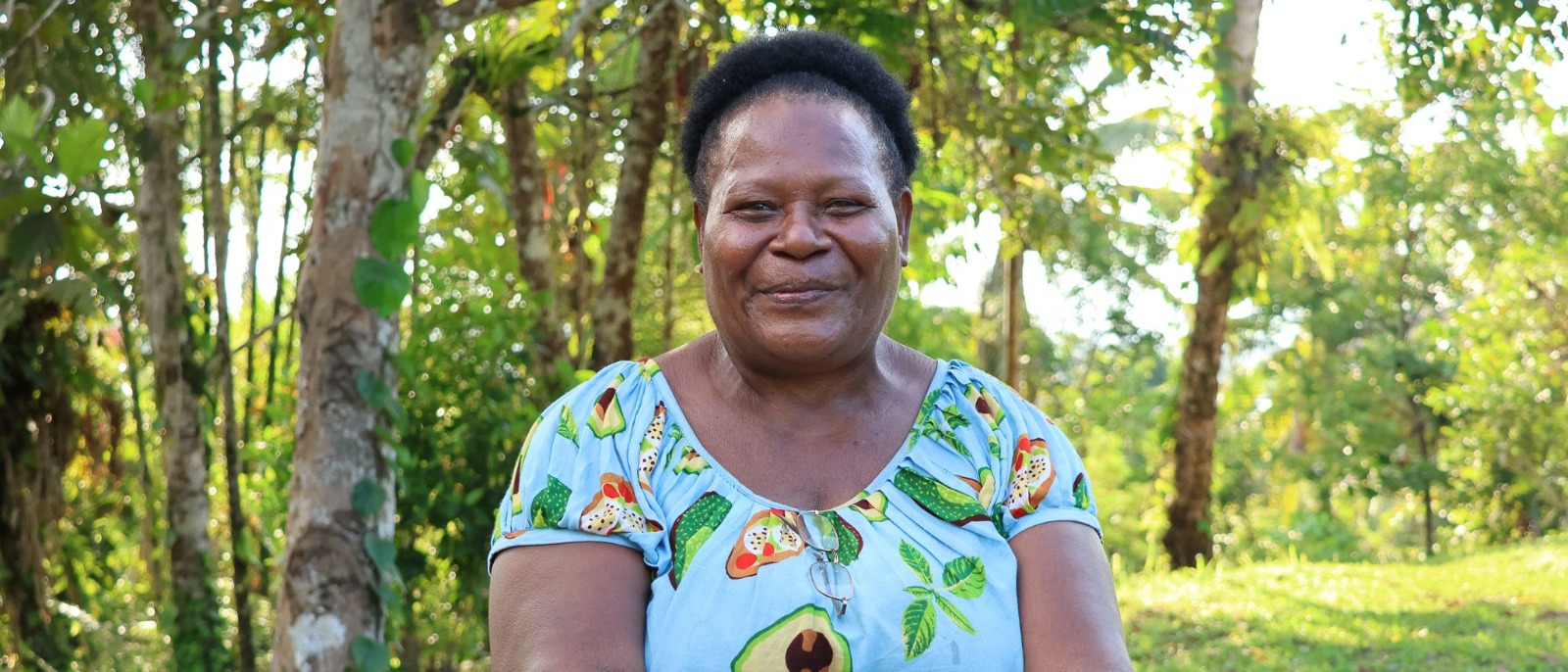
Among those who experienced these hardships was veteran vanilla grower Nancy Fale, affectionately known throughout the region as Mama Nancy.
"Vanilla once gave my family a good income and a better life," she recalls. "It felt like a dream, but when the industry faced major challenges, we struggled financially."
With nearly three decades of experience growing vanilla, Nancy has witnessed the industry's highs and lows. She has seen prices collapse, watched farmers abandon their crops and observed others return only when international prices rose again.
Recognising these challenges, the EU-STREIT PNG Programme, implemented by the Food and Agriculture Organization of the United Nations (FAO), introduced practical solutions aimed at rebuilding the vanilla industry and improving farmers' livelihoods.
The support began at the farm level. Farmers received training in improved cultivation techniques, organic treatments to combat vine diseases, and specialised tools for pollination and vine management. These interventions transformed vanilla farming from an uncertain venture into a more organised and productive business.
The Programme also focused on improving post-harvest practices, including curing, drying, and packaging. One of the most significant innovations was the introduction of solar drying technology.
Traditionally, farmers dried vanilla beans on mats under direct sunlight, often resulting in uneven curing. Pods would become scorched on one side while remaining underprocessed on the other, reducing quality and market value.
The solar dryer addressed this issue by distributing heat evenly throughout enclosed drying shelves, producing a more consistent product.

"The colour is now even all around," Nancy says. "Nice, shiny black beans. That is the best quality."
To further improve storage and marketing opportunities, the Programme introduced solar-powered vacuum sealers. This technology allows farmers to store cured vanilla beans for extended periods without losing quality or weight, giving them greater flexibility in deciding when and where to sell.
As a result, Nancy no longer feels compelled to accept the first offer that comes her way. Depending on volume and market conditions, she now earns between PGK350 and PGK600 per kilogram. One export sale to buyers in Thailand fetched PGK600 per kilogram—significantly higher than local market prices.
Over four years, her family has harvested and sold approximately 200 kilograms of cured vanilla, generating at least PGK70,000 in income at the lower end of the pricing range.
Nancy often compares vanilla to cocoa.
"Cocoa gives you money every two weeks," she explains. "It's like a fortnight pay. But vanilla is different. If you keep 20 kilos and find the right buyer, you can earn a large amount all at once."
The income has delivered tangible improvements for her family. Vanilla earnings helped build a permanent family home constructed from timber and concrete, purchase water tanks for reliable access to clean drinking water, and support her children's education through school and college.
Improved profitability also encouraged the family to address one of vanilla farming's biggest challenges—crop theft.
To protect their investment, Nancy's son, Nollan, established a shade house near the family home. The structure replaced scattered plots located deep in the bush, where crops were difficult to monitor and secure. The new system allows more vines to be grown in a smaller area while protecting plants from harsh weather conditions and keeping them within sight of the family.
"Farmers lost their love for vanilla because they kept losing their harvest," Nancy says. "The Programme has helped bring back its value."
Beyond improving production, the Programme also promoted greater participation and decision-making for women through the Gender Action Learning System (GALS) and its Farming as a Family Business approach.
Traditionally, women carried out much of the labour-intensive work involved in vanilla production—including pollination, maintenance, harvesting, curing and processing—yet often had little say in how income was managed.
The Programme encouraged families to plan and make financial decisions together, ensuring that both men and women contributed to and benefited from the business.
Inspired by the training, Nancy established a women's group and now serves as its chairlady. The group has grown to 50 members and provides support to widows, single mothers and young women who have left school due to unplanned pregnancies.
"Farming should be a family business, not only the father's business," Nancy says. "When the whole family is involved, the mindset changes."
Today, women within the group manage their own vanilla income, participate confidently in family and community discussions, and contribute to household decision-making.
Nancy hopes this transformation will spread across East Sepik and beyond.
Her advice to fellow farmers is straightforward: harvest only mature beans, follow proper curing practices, protect crops from theft, and work together as a family.
A farmer who can protect their crop, process it properly, and choose when to sell is no longer relying on luck or guesswork. They are running a business.
Nancy's success demonstrates what is possible when farmers have access to the right knowledge, tools, and support. Now, she hopes more growers across the Sepik region will follow the same path.