

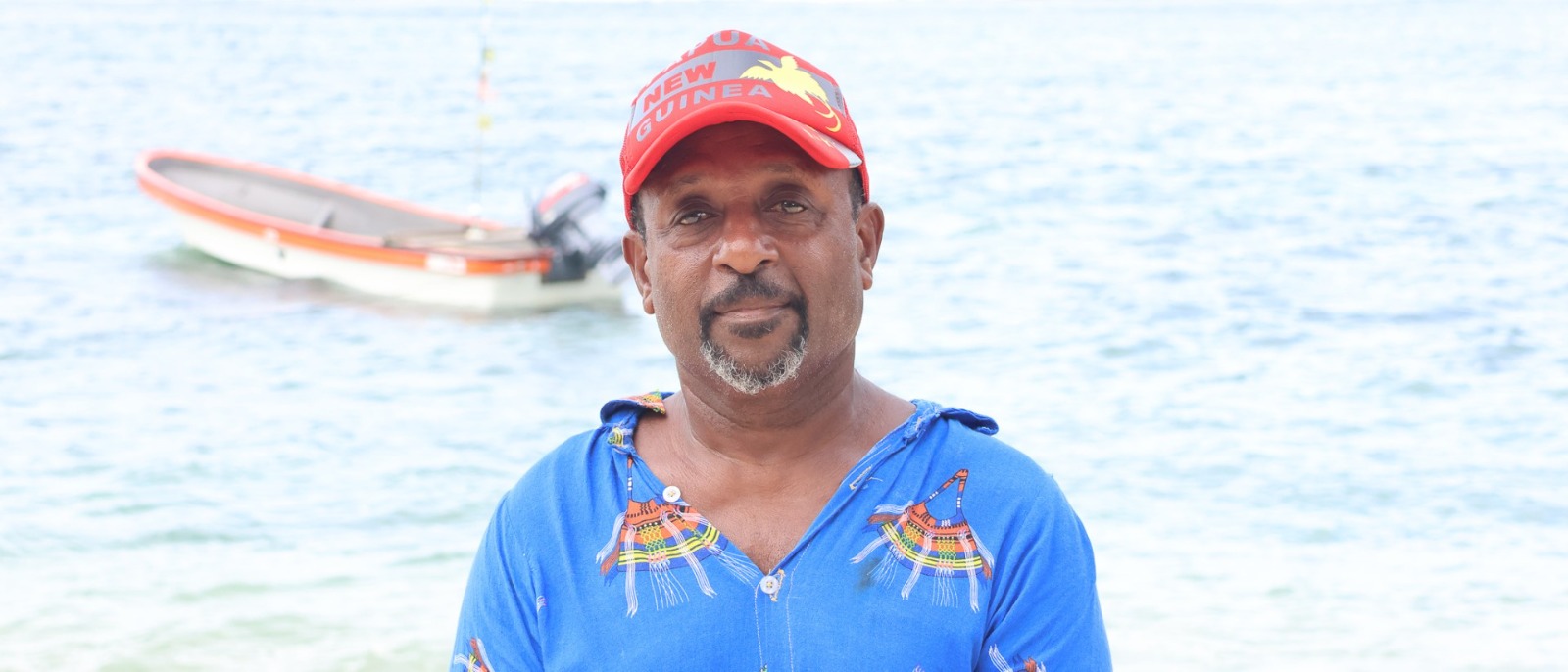
In Lido village on the western coast of Vanimo, West Sepik Province, the Haii Entrepreneurship Coastal Fishing Group now goes out to sea around three to four times a week, depending on weather conditions and fish movement thanks to the EU-STREIT PNG Programme.
Their weekly net income has increased to about K250 and at times even higher but before receiving support, the group worked with limited fishing equipment and lower catch volumes. On average, each trip produced only five to six fish, roughly 10 kilograms, and fishing was usually limited to one or two days a week, largely determined by weather, fuel availability and fish movement.
With assistance from the EU-STREIT PNG Programme’s fisheries initiative in the Greater Sepik region, the group was provided with essential equipment including a boat, 40HP motor, Fish Aggregating Device (FAD), longline gear and cooler boxes. They also received training and technical guidance in fish handling, storage and marketing.
The new boat and engine have extended their fishing range, while the Fish Aggregating Device has reduced time and fuel spent searching for fish. Group leader Mr. Steven Tekwei says the 40HP motor has also helped cut fuel costs, which is one of their biggest expenses.
Steven explains that the group now catches around 20 to 30 fish per week, or about 40 to 50 kilograms. On 25th August 2025, they achieved a major catch, landing 90 large tuna and earning K2,500 in a single trip.
However, higher catches also created storage challenges. Previously, fish had to be quickly transported to buyers in Vanimo, including hotels and restaurants, but delays often meant that around 20 to 30 percent of the catch was lost due to spoilage or lack of buyers.
The introduction of cooler boxes has helped solve this problem. Fish can now be kept on ice and stored for longer periods, allowing the group to sell even after market hours. In some cases, fish remains fresh for more than 24 hours, giving customers outside Vanimo more flexibility to collect orders. Steven says spoilage has no longer been an issue since using the cooler boxes.
“The cooler boxes really work well for us,” Steven said. “When we go out for tuna, we bring ice blocks with us so the fish stays fresh while we are still at sea. That helps maintain quality until we reach the market.”
He added that customers have responded positively, with many now placing orders ahead of time through Facebook and WhatsApp.
The group is evenly made up of men and women, with women mainly involved in marketing, processing such as cleaning and degutting and fish drying. Steven’s wife and daughter also sit on the group’s executive board.
Before the project support, weekly sales were around K200. Today, a good fishing week can generate up to K500 in sales, resulting in about K250 in profit and sometimes more when catches are strong.
The group is reinvesting its earnings back into operations, including purchasing fishing supplies from Jayapura, Indonesia, to replace damaged gear. Steven says future plans include adding another boat and improving cold storage systems to handle larger catches, reduce losses and expand their customer base.
“Now we can catch more fish, and we are seeing real progress,” Steven said. “Most of the earnings are going towards building our two new houses,” which are still under construction for family use.
At the household level, the impact is also clear. Fish remains the main source of protein, and larger catches mean more food is shared with extended family and friends. On busy fishing days, the team also buys additional food such as chicken and beef to support their work.
For Steven’s family, the changes go beyond income alone. Reduced waste, steadier earnings and improved food availability are now helping them plan ahead with more confidence.