
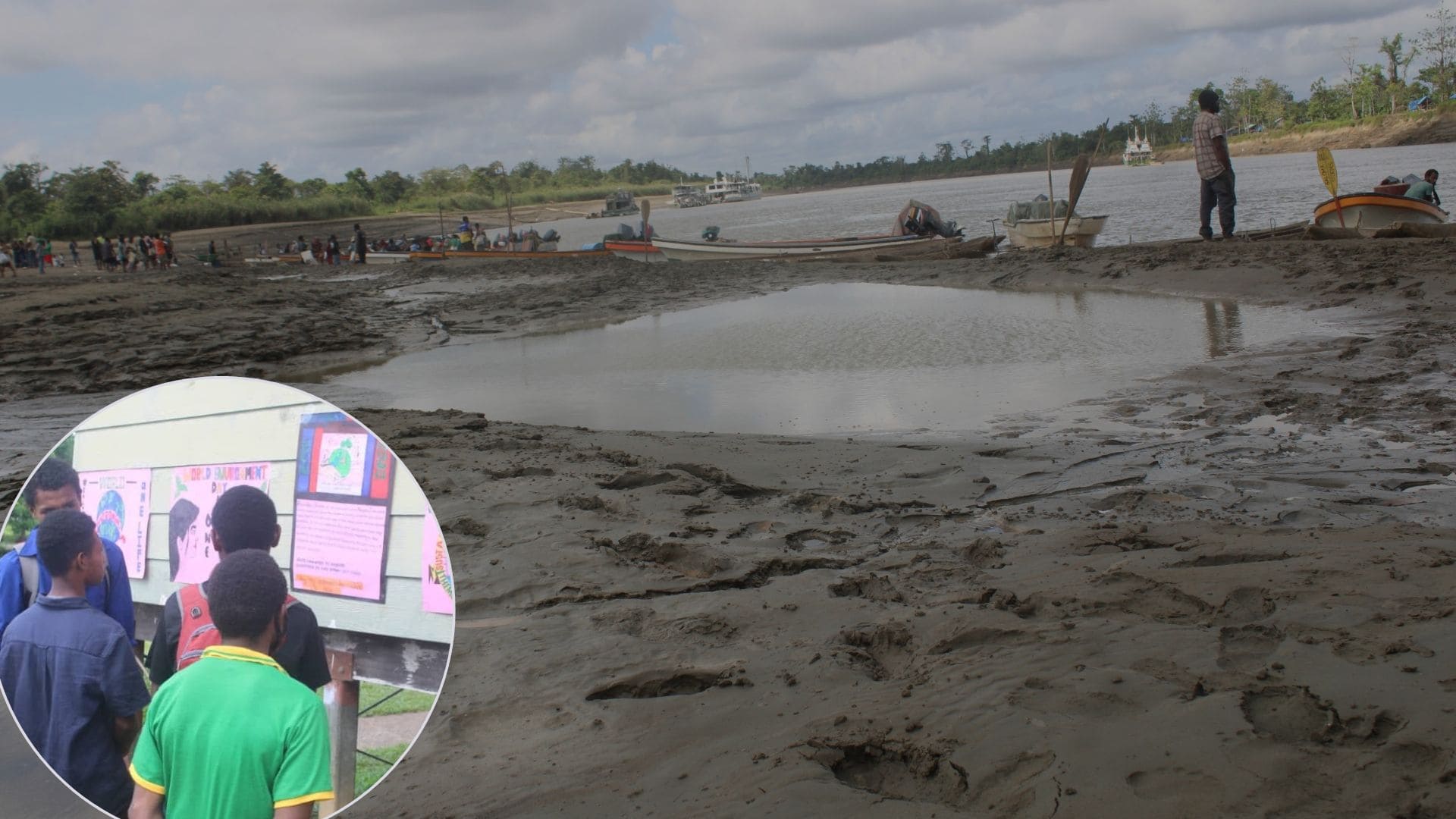
Rural schools in the North Fly District of Western province are among the services being severely affected by a prolonged dry spell that has left communities struggling to access water.
North Fly District Health Manager Rody Ukin says the shortage has affected education, health services and other essential government operations across the district.
He said some rural schools had been forced to close because there was not enough water available for students and staff to use.
“School has been severely affected with no water,” Ukin said.
The impact extends beyond schools, with health workers also facing difficulties conducting outreach and extension services because of a shortage of fuel and transportation.
Ukin said there was not enough diesel and petrol available to support regular travel to remote communities.
The shortage has affected outboard motors used to travel along waterways, further limiting access to isolated communities.
“This sort of thing has affected the slow delivery of service now,” he said.
The water crisis has also placed additional pressure on families, with some residents leaving their homes to search for water in streams and wells.
Ukin said communities were struggling to maintain basic hygiene because water sources had become increasingly distant.
Health authorities are monitoring the situation closely, particularly for possible increases in waterborne and other illnesses.
The district has about 14 major health facilities, including government and church-run facilities and aid posts, which have been instructed to report any unusual increase in disease cases.
Meanwhile, provincial and district authorities are working on a coordinated response to the dry spell.
Reports are being compiled from education, health, agriculture and other sectors to determine the extent of the impact and identify urgent needs.
Ukin said the situation in North Fly was already serious and required urgent intervention, particularly to ensure communities can access safe water and essential services.