

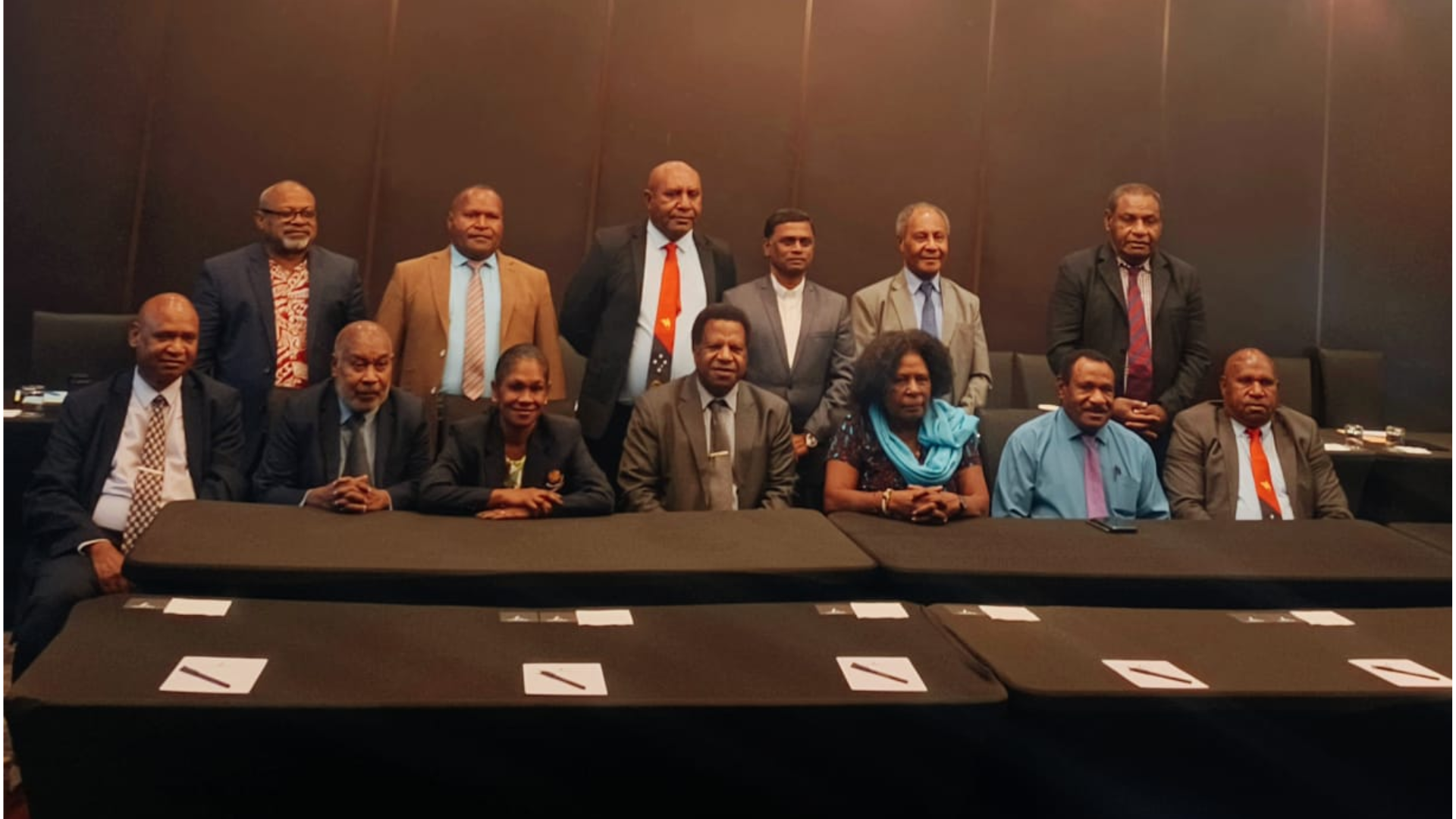
The National Education Department has officially sworn in the new members of the National Education Board today, June 18, 2026.
Speaking at the event, Education Secretary Dr. Uke Kombra noted that previous boards successfully established crucial policies and spearheaded major reforms. He stated that he expects the incoming board to maintain this momentum and continue driving key initiatives across the sector.
Dr. Kombra acknowledged the diverse sectors represented on the board, emphasizing that local collaboration is essential to addressing the challenges ahead.
“The board is as strong as the diversity and active participation and contribution of its purpose. We rely heavily on our state representatives, our regional representatives, our partners from the church and our business and civil leaders; the academic and also teacher representatives, to bring local solutions to this board,” he said.
He reminded the new members of the weight of their responsibilities, adding, “The legacy of the system that you will create will be very important for our future.”
The transition comes amidst sweeping changes under the current National Education Plan (2020–2029). Dr. Kombra pointed out that the new board will be directly responsible for guiding several critical ongoing initiatives.
“There are many changes and reforms that have taken place in our current education plan. Some of these, as you are aware, will be in the space of the schools’ curriculum and teacher development, as we continue to implement the Standard-Based curriculum, the national teaching in-service policy. These are some critical policies that you will work through with the education agencies.”
In addition, the department is prioritizing school infrastructure modernization and the rollout of the 1-6-6 structure. Dr. Kombra highlighted that past reforms have already boosted student enrollment from 30,000 to 100,000, particularly by giving second-chance learners the opportunity to complete their education.
Also, while expanding access is a major milestone, he stressed that improving educational quality is equally vital.
He noted that this structural overhaul aims to streamline the academic pipeline.