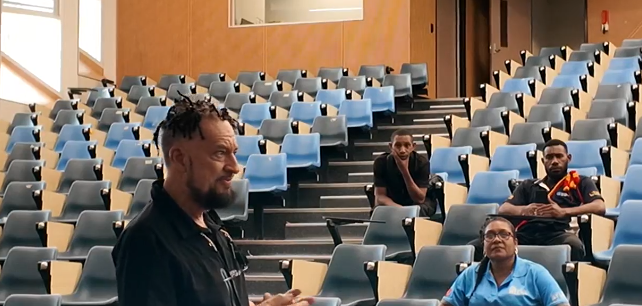



Port Moresby's Gordons Secondary School Principal, Mr. George Kenega, has revealed that limited spaces in universities and other institutions of higher learning are a major reason many high-performing students fail to secure placements, despite appearing to meet academic requirements.
Mr. Kenega explained that while many students achieve strong grades, particularly A’s, not all A grades are treated equally during the university selection process. He said institutions apply detailed classifications when assessing results, with distinctions such as “top A,” middle-range A, and A grades that are closer to a B.
“On paper, it may look like students have met the criteria, but when selections are made, those differences in grading become critical,” Mr. Kenega said. “Some A's are very high, while others fall into lower categories, and universities take those classifications into account.”
He noted that this grading variation often leaves parents and schools questioning why students with good results are not selected. According to Mr. Kenega, the issue becomes clearer once the grading categories and selection criteria used by universities are fully understood.
In addition to the grading standards, Mr. Kenega highlighted the growing pressure caused by limited university capacity.
He said the number of students completing secondary schools continues to increase each year, while available spaces in higher learning institutions remain largely unchanged.
“The output of students keeps rising every year, but universities cannot expand at the same pace. As a result, fewer students are being selected, even though many of them perform well academically,” he said.
Mr. Kenega stressed that the situation does not reflect a lack of effort or ability among students, but rather structural limitations within the higher education system.
“On the surface, our students have done well, but the reality is that limited spaces and strict selection criteria prevent many deserving students from moving on to universities,” he said.
He called for better planning and expansion in the higher education sector to accommodate the increasing number of qualified school leavers.