
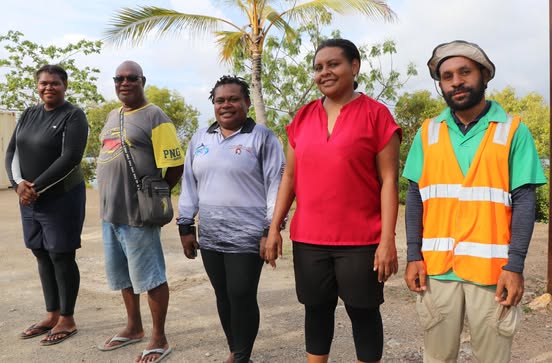
Rita Goiye, a researcher from the University of Papua New Guinea is on a mission to help protect and restore Papua New Guinea’s coral reefs, which are some of the richest and most pristine in the world.
This is according to a media statement from the Australian High Commission.
Backed by a K100,000 Climate Research Grant from the Australian Government, Rita is investigating the environmental conditions affecting the survival and growth of corals in Bootless Bay in Central Province.
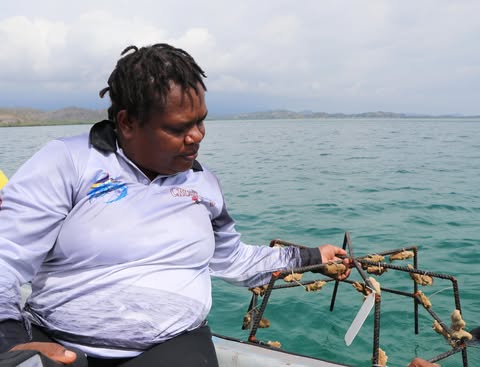
On a hot November morning, Rita and her research team were on a boat near Loloata Island Resort, visiting the bay to check on coral nurseries.
An essential tool for their work is an underwater multimeter, which can measure water temperature, oxygen levels, salinity, and acidity at the same time.
Rita used a portion of her Climate Research Grant to purchase this equipment as well as to fund other research expenses.
With the help of the underwater multimeter, Rita and her team can collect measurements at multiple locations and water depths in one trip, improving the accuracy and efficiency of their data gathering.
Rita hopes the findings from her research will go towards developing coral restoration guidelines for PNG and help inform reef conservation work being undertaken by local non-government organizations across the country.
“It will provide guidance to local conservation practitioners back in the coastal communities by assisting them ‘step-by-step’ on how to manage coral nurseries and plant new corals at degraded coral reef sites,” Rita says.
“This research will also provide scientific data to support policy development, inform climate action plans and promote evidence-based decision-making for climate resilience and conservation.”
PNG has one of the world’s most extensive coral reef ecosystems, covering an estimated 40,000 square kilometers.
They not only create a spectacular underwater environment but also provide a critical ecological habitat for marine life, support fisheries, boost tourism, protect coastlines, and sustain cultural and economic livelihoods for thousands of coastal communities.
But Rita says PNG’s reefs are, like those elsewhere in the world, under pressure.
“At a personal level, people can play a part to help protect coral reefs by reducing pollution, supporting marine conservation, practicing sustainable fishing, monitoring coral health, and raising awareness about the impact of climate change on reefs.”
With more than 10 years of experience working in marine conservation, Rita admits it can be difficult.
“It’s very challenging as a female working in this kind of environment.”
“You have got to have a passion to work in conservation. There are safety concerns, and you are often spending days, weeks or even months away from family conducting research and doing conservation works where you do not have excess to mobile networks. It is a challenge.”
Despite this, Rita relishes the opportunity to contribute to marine conservation and empower others to do the same.
She is one of six current recipients of Climate Research Grants, which are provided through a partnership between the PNG Climate Change Development Authority (CCDA) and the Australian Government.