

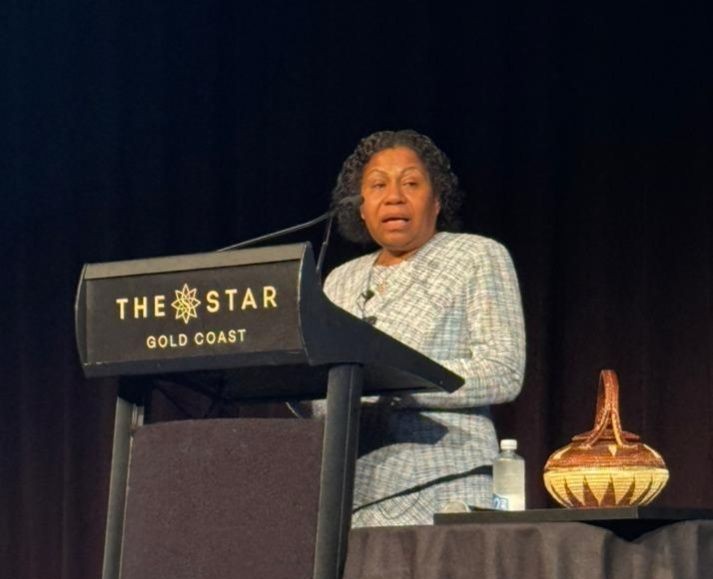
Mrs. Rachael Marape, wife of Prime Minister James Marape, has called on international partners and business leaders to continue supporting the medical ship that delivers life-saving health services to some of Papua New Guinea’s most remote coastal and island communities.
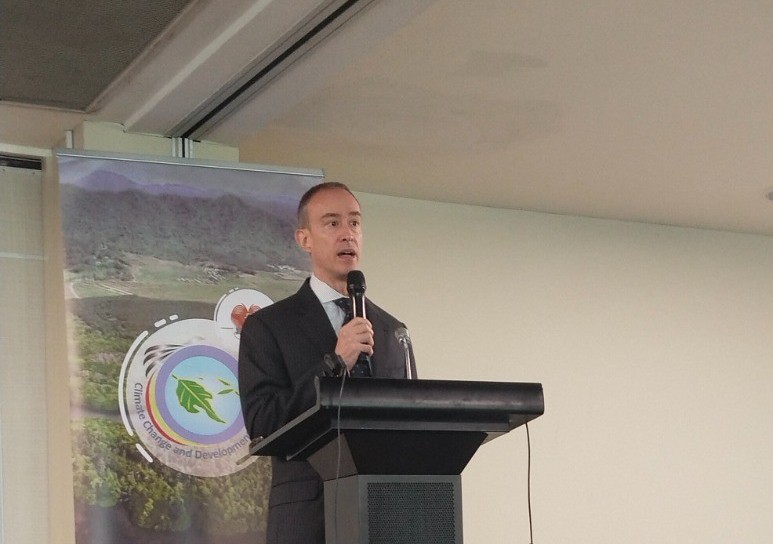
Speaking as Patron of YWAM Ships PNG, Mrs. Marape addressed more than 280 business leaders and international donors at a fundraising event on the Gold Coast, in Australia, where she highlighted the critical role the YWAM medical ship plays in complementing government health services across Milne Bay, Central, Gulf and Western provinces.
Mrs. Marape told the gathering that while the Papua New Guinea Government is doing its utmost to improve health service delivery nationwide, the scale of need—particularly in hard-to-reach maritime regions—remains significant.
“The Government is doing everything it can to strengthen health services for our people, but the challenges are vast, especially in remote coastal and island areas,” she said.
“YWAM Ships has been doing its part to help ease the burden on the public health system, and for that we are deeply grateful.”
Youth With a Mission (YWAM) is a global humanitarian organisation founded in 1960 and operating in more than 180 countries. In Papua New Guinea, YWAM Ships PNG has been providing critical medical, dental and surgical services for more than a decade, focusing on communities with limited or no access to hospitals and specialist care.
Through its medical ship, the organisation delivers free primary health care, dental services, eye care and surgical procedures, while also supporting medical training, health education and capacity-building for local health workers.
The programme works closely with the Papua New Guinea Government, provincial health authorities and international partners to reach isolated maritime populations.
Staffed by volunteer doctors, nurses, dentists and medical specialists from around the world—working alongside Papua New Guinean health professionals—the medical ship has served thousands of patients over the past 10 years.
“For many coastal and island communities, it represents their only access to specialist medical care.”