

The new health partnership between Papua New Guinea and the United States is expected to deliver major benefits for the country’s people by strengthening HIV prevention and treatment, improving early disease detection, and expanding access to life-saving healthcare services—particularly for mothers and children.
Papua New Guinea is set to strengthen its healthcare system and improve health outcomes for thousands of citizens following the signing of a major health partnership with the United States, according to Health Minister Elias Kapavore.
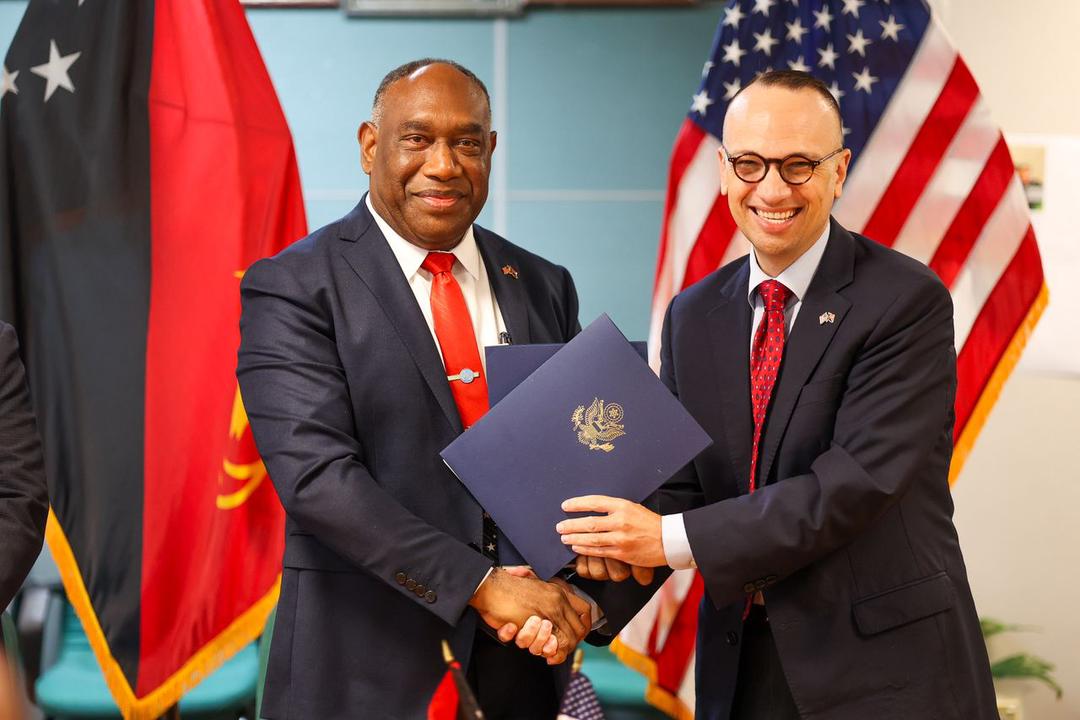
Speaking at the official signing of a Memorandum of Understanding (MOU) in Port Moresby this week, Minister Kapavore said the agreement represents a significant step forward in addressing some of the country’s most urgent health challenges, including HIV, disease surveillance, and access to essential health services.
The partnership includes approximately USD $15 million (about 63 million kina) in funding over the next four years, aimed at strengthening prevention, testing, and treatment programs while also improving the overall health system.
A key focus of the agreement is tackling HIV, which remains a major public health concern in Papua New Guinea. The country is currently estimated to have around 120,000 people living with HIV, with approximately 11,000 new infections recorded each year.
Minister Kapavore highlighted mother-to-child transmission as an urgent priority, noting that around 2,700 babies are born with HIV annually—cases he described as largely preventable.
“Every year, approximately 2,700 babies are born with HIV. These are preventable cases,” he said. “If we strengthen testing and treatment for mothers during pregnancy, we can significantly reduce these numbers and give children a healthier start to life.”
Health experts support this approach, noting that early diagnosis, consistent treatment, and improved antenatal care can dramatically reduce transmission rates, making it one of the most impactful areas for investment in maternal and child health.
Beyond HIV, the partnership will also strengthen Papua New Guinea’s ability to detect and respond to disease outbreaks. Investments will go into improving disease surveillance systems, laboratory capacity, data platforms, and diagnostic equipment such as PCR machines, along with training for health workers.
These improvements are expected to allow faster detection of outbreaks and better use of resources across the health system.
“This is about building a system that can respond quickly and effectively,” Minister Kapavore said. “Stronger data and better technology will allow us to plan smarter and protect our people.”
The agreement also places strong emphasis on innovation and technology, particularly given Papua New Guinea’s challenging geography and the difficulty of reaching remote communities.
Digital health systems and improved data networks are expected to expand access to healthcare services in rural areas where delivery has traditionally been limited.
The initiative aligns with Papua New Guinea’s National Health Plan 2021–2030, which prioritizes partnerships and health system strengthening. Officials say the collaboration will not only address immediate health needs but also build long-term resilience in the system.
The government has also increased its own investment in health, with the 2026 national budget allocating a record 3.2 billion kina to the sector. Minister Kapavore said the combined funding from both governments would translate into better access to care, stronger disease prevention, and improved health infrastructure across the country.
The United States has previously supported health programs in Papua New Guinea, including HIV response initiatives, oxygen supply infrastructure, and laboratory upgrades. The new MOU builds on these efforts, aiming for long-term and sustainable impact.
“This partnership is about improving lives,” Minister Kapavore said. “It ensures our people receive the care they need, when they need it, and strengthens our ability to respond to future health challenges.”
Implementation of the agreement will be carried out through national and provincial health authorities in collaboration with U.S. partners, with the government expecting measurable improvements in health outcomes in the coming years—especially for mothers and children.