

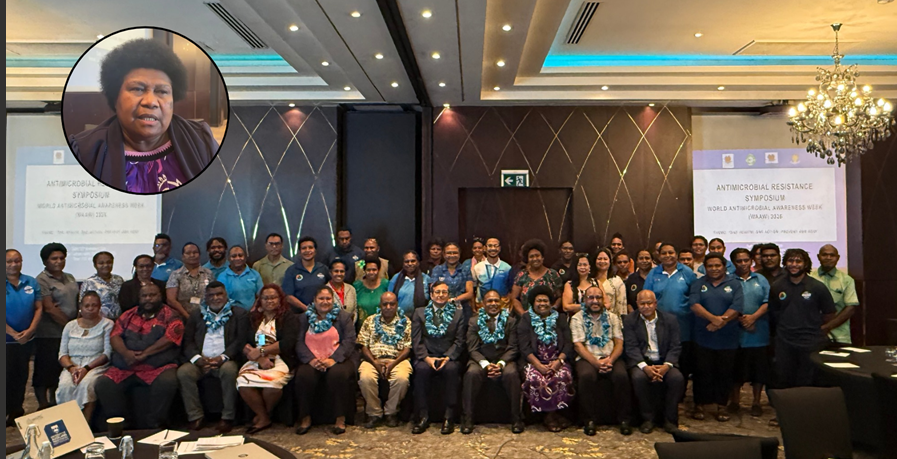
While significant progress has been made in strengthening the country's ability to detect and monitor drug-resistant infections, sustaining those achievements remains a major challenge.
This is according to Dr Dora Lenturut-Katal, who is the Deputy Secretary, National Health standards & Compliance and National Antimicrobial Resistance (AMR) Steering Committee Chair, when speaking during the AMR symposium hosted in Port Moresby this week.
She warns that the country may risks losing hard-won gains in the fight against antimicrobial resistance unless the government take greater ownership of surveillance, funding and implementation efforts as donor support comes to an end.
The warning comes as the Fleming Fund programme, which has supported Papua New Guinea's antimicrobial resistance surveillance systems for the past six years, prepares to end.
Dr Lenturut stated that the country has successfully established a national AMR governance framework, strengthened laboratory capacity and improved surveillance reporting through partnerships with the Fleming Fund, the United Kingdom Government, the World Health Organization and Burnet Institute.
Health Secretary Pascoe Kase warns that while significant investments have strengthened the country's surveillance and laboratory systems, sustaining those gains will require stronger leadership, funding and commitment from all sectors.
However, they acknowledged that the country's first National AMR Action Plan 2019-2023 exposed serious weaknesses in implementation, including limited monitoring and evaluation, insufficient dedicated personnel and ongoing sustainability challenges.
According to Dr Lenturut, only 15 per cent of activities outlined under the first action plan were implemented by the end of the programme period.
The low implementation rate has raised concerns about Papua New Guinea's ability to maintain momentum against a growing global health threat that reduces the effectiveness of antibiotics and other antimicrobial medicines.
The health department warns that antimicrobial resistance can lead to longer illnesses, increased healthcare costs, treatment failures and higher death rates as infections become harder to treat.
Dr Lenturut stated that while surveillance systems are now generating valuable data on drug-resistant infections, the greater challenge is ensuring that information leads to stronger treatment guidelines, responsible prescribing practices and improved infection prevention measures.
She mentioned the revised National AMR Action Plan 2024-2030 seeks to address the shortcomings of the previous strategy by placing greater emphasis on accountability, coordination, monitoring and long-term government ownership.
The Department of Health is now calling for antimicrobial resistance activities to be integrated into government plans, budgets and routine operations to reduce dependence on external funding.
Dr Lenturut also stressed the need for stronger collaboration across the human health, animal health, agriculture and environmental sectors, noting that antimicrobial resistance is a One Health issue that extends beyond hospitals and clinics.
To mark World AMR Awareness Week, health authorities say the challenge is no longer simply building surveillance systems, but ensuring the country has the resources, leadership and commitment needed to sustain them and prevent the spread of drug-resistant infections.