

The Sir Brian Bell Foundation and The Fred Hollows Foundation PNG have announced a new strategic partnership aimed at strengthening eye care services and training in Papua New Guinea (PNG).
The collaboration will focus on expanding the country’s eye care workforce and supporting the establishment of the PNG Centre for Eye Health, which is scheduled to open in Port Moresby in late 2026.
PNG has one of the highest rates of avoidable blindness and vision impairment in the world, and the highest recorded rate in the pacific.
A national survey conducted in 2017 found that 5.6 per cent of people aged over 50 are blind, while a further 21.1 per cent live with some form of vision impairment. An estimated 90 per cent of these cases are preventable or treatable.
Despite this, access to eye care remains limited due to a shortage of trained specialists, insufficient healthcare infrastructure, and the challenges of reaching remote and rural communities.
At the same time, the country continues to face rising cases of non-communicable diseases, including diabetes.
Poorly managed diabetes can lead to diabetic retinopathy, a condition that causes irreversible vision loss if left untreated.
The current lack of diabetic retinopathy services, corrective eyewear and low-vision devices, places people living with diabetes at significant risk of blindness.
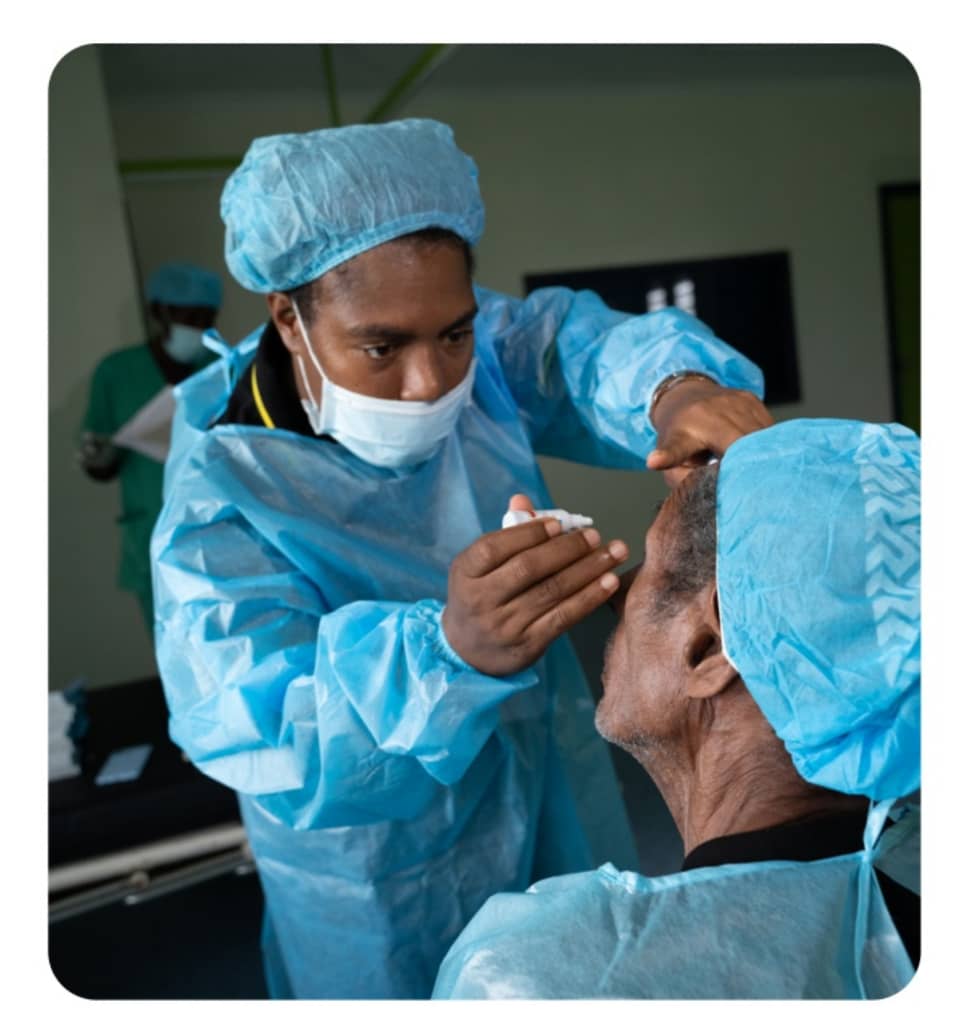
Under the new partnership, the two foundations will contribute to addressing these challenges by supporting the development of local eye care professionals.
As part of this commitment, the Sir Brian Bell Foundation will fund the training of three eye care nurses each year for the next three years through the Advanced Diploma in Eye Care program at Divine Word University.
The initiative builds on more than two decades of training support by The Fred Hollows Foundation NZ, which, through its local presence, has helped train 141 eye nurses and clinicians and 12 eye doctors who now staff clinics and outreach services across the country.
Chief Executive Officer of the Sir Brian Bell Foundation, Bronwyn Wright, said the partnership is focused on ensuring people receive treatment earlier and closer to their communities.
“With PNG’s population projected to exceed 21 million by 2050, the need for trained eye care professionals, accessible services, and long-term infrastructure will only continue to grow and we’re proud to help build that capacity,” Wright said.
The partnership also supports the construction of the PNG Centre for Eye Health, a purpose-built eye care training and service facility currently under development by The Fred Hollows Foundation NZ and its local partners.
The centre is being built on the shared grounds of Port Moresby General Hospital and the University of Papua New Guinea’s School of Medical and Health Sciences.
It will expand training opportunities for eye care professionals and provide specialised services, including the country’s first dedicated diabetic retinopathy clinic and paediatric ophthalmology services.
In addition, the centre will support research, innovation, coordination, and leadership across the eye health sector.
Chief Executive Officer of The Fred Hollows Foundation NZ, Dr Audrey Aumua, said the impact of the partnership will extend beyond health outcomes.
“Restoring sight allows adults to return to work, enables children to stay in school, and takes pressure off families. Through this partnership, real progress is being made toward ensuring that preventable blindness no longer limits the potential of individuals or communities,” she said.
“Together, the two foundations are investing in practical, locally led solutions to build a stronger eye healthcare system for Papua New Guinea.”
Both organisations have longstanding ties to PNG. The Fred Hollows Foundation NZ continues the work of the late Professor Fred Hollows, an internationally recognised eye surgeon and social justice advocate.
The Sir Brian Bell Foundation carries forward the philanthropic legacy of Sir Brian Bell, whose contributions supported community development across the country.