

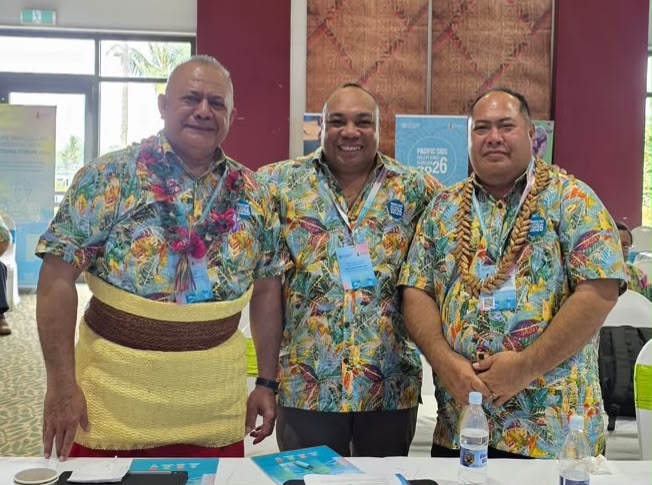
Papua New Guinea is calling for stronger regional cooperation and targeted investment to build sustainable fisheries industries, strengthen food security, and create lasting jobs and economic opportunities for Pacific communities.
The Hon. Jelta Wong, MP, Minister for Fisheries and Marine Resources, issued the call at the Pacific SIDS Solutions Forum in Port Vila during a session focused on fisheries’ contribution to scaling innovation and financing agrifood systems transformation.
“Our ocean is not a barrier between our countries. It connects our communities, cultures, markets, and shared fisheries resources,” Minister Wong stated. “If we work together, it can connect Pacific innovation and investment to lasting wealth, food security, and jobs for our people.”
Fisheries and commercial agriculture remain strategic priorities for Papua New Guinea under its Medium-Term Development Plan. The country is actively working to increase production and processing, diversify beyond tuna, and strengthen coastal fisheries and aquaculture while managing resources responsibly and retaining more value within local economies.
Minister Wong highlighted aquaculture as both a significant opportunity and a challenge, noting that feed can account for up to 80 percent of total aquaculture costs, making affordable local production essential.
To address this, Papua New Guinea’s National Aquaculture Development Strategy prioritises:
• Upgrading and building hatcheries and feed-production facilities.
• Establishing three nucleus aquaculture estates by 2029.
• Completing regulatory frameworks to support investment and business growth.
• Attracting $50 million in investment by 2035 for essential infrastructure, including hatcheries, feed mills, cold storage, and processing.
He pointed to Papua New Guinea’s trap-net fishing trials, conducted since 2012–2013 across coastal communities in East Sepik, Morobe, Milne Bay, and New Ireland, as an example of how appropriate technology, community ownership, and market access can improve local fish supply. He stressed that technology must be backed by strong governance and responsible fishing practices.
Regional cooperation remains central to Papua New Guinea’s strategy. Minister Wong described the East New Britain Initiative (ENBi) as a critical, Pacific-led platform for collective investment in the tuna value chain. ENBi priorities include regional tuna processing, fisheries hubs and spokes, value-added activities, and the exploration of a regional fisheries development fund.
“Rather than exporting value along with our fish, we can build stronger regional industries in processing, storage, transport, services, and skills—and keep more of the economic benefit here,” Minister Wong said.
Minister Wong also highlighted the Pacific Regional Hand-in-Hand Initiative, which unites 14 Pacific nations across three priority regional investment projects:
1. Biosecurity and pest management.
2. Digitalisation, certification, and traceability.
3. Value-chain infrastructure (focusing on coconut, taro, and fisheries value chains).
Improving regional connectivity is critical to unlocking these opportunities. Costly and unreliable transport in Papua New Guinea currently limits the movement of fish, goods, and knowledge. The Minister noted that regional shipping solutions, better post-harvest facilities, cold chains, stronger market links, and more open trade arrangements are vital to shifting goods easily across Pacific borders.
Minister Wong emphasized that economic growth must go hand in hand with the protection of marine ecosystems through responsible fishing gear, effective monitoring, and shared management approaches.
Papua New Guinea stands ready to work with the Food and Agriculture Organization (FAO) of the United Nations, the Pacific Islands Forum Fisheries Agency (FFA), regional partners, and the private sector to turn these priorities into practical investments. Key opportunities include scaling coastal fishing technologies, improving cold storage, and making fuller use of tuna resources, including processing by-products into fish oil, marine collagen, and aquaculture feed.
“The Pacific has the resources, the knowledge, and the determination to lead this transformation,” Minister Wong concluded. “What we need is cooperation that connects our efforts and investment that creates lasting value at home.”