

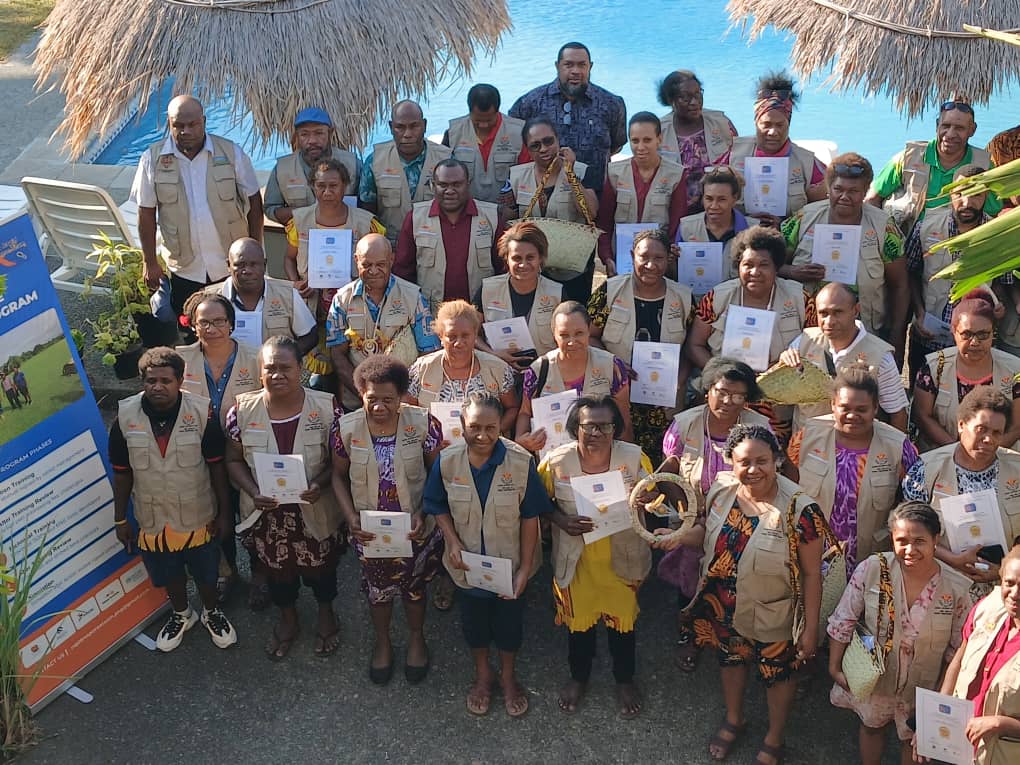
Provincial Health Authorities (PHAs) across Papua New Guinea have been undergoing Rapid Response Team (RRT) training to strengthen the nation’s capacity to address future health emergencies.
Delivered by the National Department of Health (NDoH) in partnership with the Field Epidemiology Training Program PNG (FETPNG), the World Health Organization (WHO), The University of Newcastle (Australia), and the Australian Government, the initiative focuses on getting the basics right and enhancing existing public health systems.
A recent training session held in Kokopo empowered multidisciplinary participants from the PHAs of East New Britain, West New Britain, and New Ireland provinces.
Highlighting the necessity of a swift local response, Manager for Health Securities and Surveillance, Mr. Barry Ropa, emphasized that local health authorities must be equipped to act immediately when health threats arise.
“The RRT training being conducted is to build sub national capacity and ensure local health authorities can quickly detect, investigate, and contain acute public health threats.”
Mr. Ropa noted that since the inception of the RRT program in 2018, there has been a growing frequency of public health incidents requiring proper risk assessment and management.
“In such emergency cases, strategic thinking is required where it must meet our local context but at the same time in line with the health international standards.”
“It is important we show desired results with implementation of work to convince partners to intervene where the government cannot fully support.”
The RRT program consists of five phases, three of which have already been completed. While trainings are being delivered across the country, the responsibility now falls on individual PHAs to ensure financial resources are available in a timely manner during emergencies.
East New Britain PHA Director of Public Health, Dr. Mathew Mongolop, stressed the need for dedicated funding streams for surveillance activities to prevent delays during critical moments.
“I also want to call on the Provincial Government and the District Development Authorities (DDA) to honour the 20% funds designated for health service improvements.”
To date, fifteen PHAs across the country have received RRT training under the current rollout, with eight remaining PHAs set to complete the program in upcoming phases.