

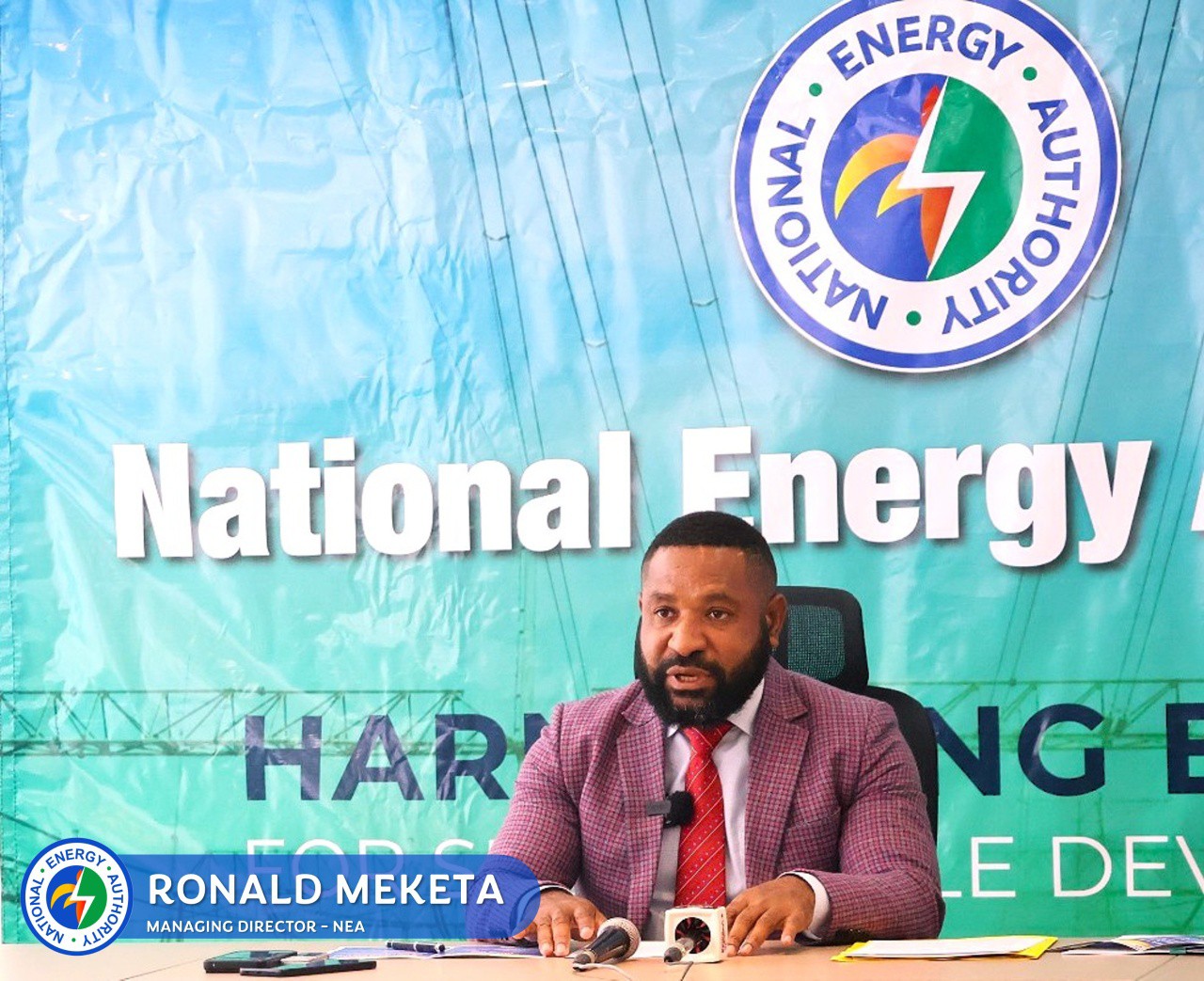
The National Energy Authority (NEA) has launched new regulations to modernize Papua New Guinea’s energy sector and expand electricity access to remote communities.
Speaking at the launch yesterday, NEA Managing Director Mr. Ronald Meteka said since the establishment of the National Energy Authority under the National Energy Authority Act of 2021, the authority has undertaken comprehensive legislative reform to build a modern and effective regulatory framework for Papua New Guinea's energy sector.
He highlighted the need for centralization, noting, “Previously it was disseminated or partially regulated through different authorities and institutions. Currently it's being centralized in one building or an organization. So that it de-risks and supports the consumer complaints we have on the reliability issues and the lack of connectivity in the country since independence.”
On legal reforms, he explained, “The reform process began with the National Energy Authority Amendment Act that we brought in 2023, which addressed constitutional compliance issues relating to the separation of powers between executive and parliament, particularly concerning law imposition of regulatory fees and charges. No one government department or authority has the powers to impose fees and charges except through the parliamentary process. We have to comply with that by bringing an amendment.”
He outlined the new regulations, saying, “Today we will be launching the five core regulations: National Energy Authority General Regulations 2025; National Energy Authority Service and Installation Regulations 2025; National Energy Authority Electricity Industrial Regulations 2025; National Energy Authority Refined Petroleum Products Supply Regulations 2025; and National Energy Authority Off-Grid for Small Power Systems 2025.”
On off-grid electrification, he said, “Why we are promoting off-grid electrification and small power systems is because 80% of the Papua New Guineans are not connected to electricity. The challenge is for us as an entity, as a government, as a Papua New Guinean, to bring those national services to the communities, to those islands, to those valleys and the mountains.”
He stressed PNG Power is not the only provider: “Last month we issued a full concession to Ok Tedi Power to have full concession over three provinces in Papua New Guinea, including Western Province, East Sepik, and West Sepik. They have the same types of licenses that PNG Power got, to generate, transmit, retail and distribute electricity exclusively in those provinces. Ok Tedi Power is a 100% subsidiary of Ok Tedi Mining Limited—60% National Government and 40% the landowners of Ok Tedi Mining Limited.”
On energy security, he added, “Currently, we don't have a law that licenses and regulates the refined petroleum products market. Anyone can go and put up a service station and start supplying fuel. We are working to establish a law that will regulate the industry and protect energy security for the country.”
Reflecting on energy’s role in development, he said, “Energy drives the economy. From fishing communities with solar-powered cold storage to downstream processing, data centers and mining, everything runs on energy. These reforms lay the foundation for sustainable growth and national development.”
“The second phase of legislative reform addresses technical oversights, including clear powers to establish electricity tariffs and regulate power purchase agreements. These measures make energy projects, small power systems, rooftop solar, or mega hydro, achievable in a reasonable time and within budget. Energy security is key for Papua New Guinea.”