

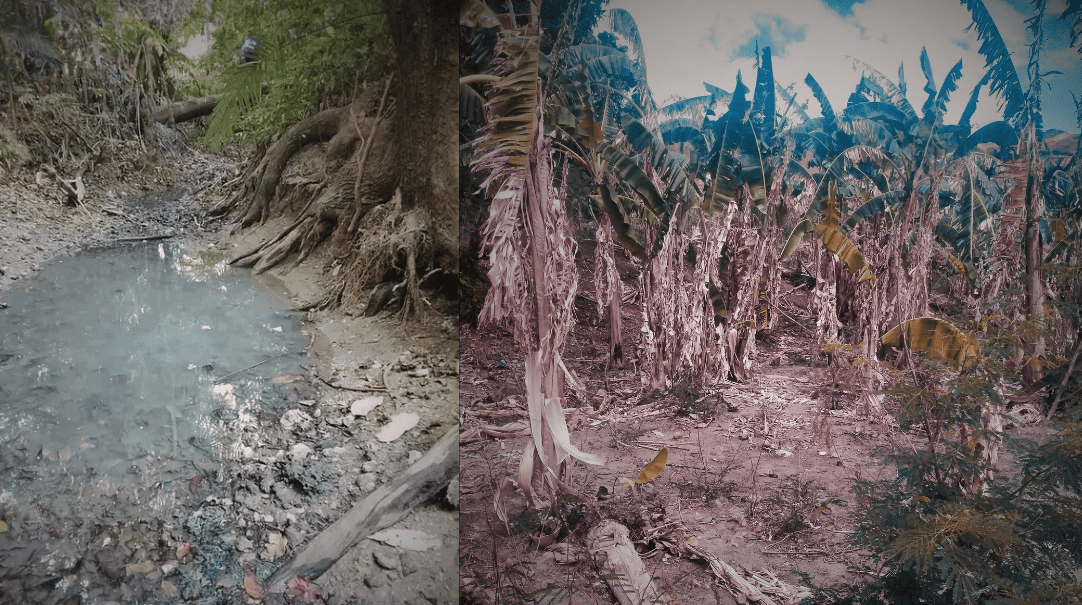
As El Niño conditions persist across Papua New Guinea, Milne Bay Province has emerged as one of the hardest-hit maritime regions in the country.
Following a comprehensive assessment of the situation, provincial authorities confirmed that water levels have dropped drastically. Outer islands and atolls have completely run out of fresh water supplies, while the North Coast of the Milne Bay mainland is being devastated by wild bushfires.
Milne Bay Provincial Disaster Coordinator, Mr. Randal Ganisi highlighted that the Kiriwina-Goodenough, Esa'ala, and Ferguson Islands are facing critical water shortages. Most local water sources are drying up, which has caused widespread crop failure and severely threatened local food security.
Mr. Ganisi added that the Samarai-Murua area—particularly the Bennett Group and the Rossel Islands—is experiencing similar crises. Most of their food gardens have dried up, and banana crops have been heavily damaged by accompanying strong winds.
In contrast, the Milne Bay mainland has maintained an ample water supply capable of sustaining the main township for now, though officials warn this status could deteriorate by next month.
"The area toward the Owen Stanley Range remains green, but toward the North Coast, everything has turned brown," Mr. Ganisi noted. "An aerial survey revealed that every one to two kilometers of vegetation has been scorched by wild bushfires triggered by the intense El Niño heat."
On the mainland, the Agaun Wards across the Rabaraba, Makamaka, and Weraura sections—including Daka—have also been severely impacted by these bushfires.
The critical water shortage on the outer islands has forced immediate operational changes. Schools in Samarai-Murua have been instructed to dismiss students early at 12:00 PM daily.
To combat the unfolding crisis, Mr. Ganisi confirmed that all districts in Milne Bay Province have received their respective shares of the K2.5 million government disaster relief funding, which was approved and released by the National Executive Council last week.
"With these funds now distributed, all district coordinators are urged to act swiftly," Mr. Ganisi stated. "They must collaborate closely with the Provincial Disaster Office to formulate immediate strategies for water distillation and food ration distribution across all affected communities."
Because community tanks are empty and natural water sources are failing, the Provincial Disaster Office plans to prioritize partnerships with island and atoll districts. The immediate goal is to install water distillation machines at central hubs on each island to ensure residents have access to clean, safe drinking water.
As these severe drought conditions continue, authorities are urging the public to remain resilient, conserve what little water remains, and use all resources wisely.
"Everyone must remember to assist one another, limit outdoor activities, wear hats and sunglasses to prevent sunburn, and use face masks to protect against dust and strong winds," Mr. Ganisi advised. "Prioritizing the care of vulnerable family members—especially the elderly, children, and the sick—is paramount."
Mr. Ganisi reassured affected populations that water, food rations, and essential emergency supplies will reach them shortly, now that the disaster relief funds are active at the district level.