
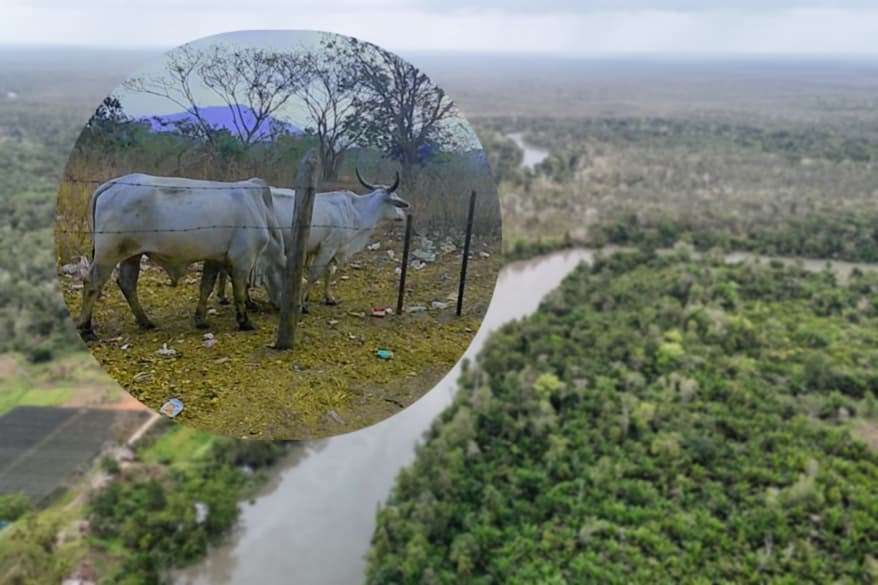
A K10 million pilot cattle project is set to bring 200 cattle from Central Province to Western Province, with Awaba, Kenewa and Morehead identified as the first sites for the livestock rollout.
The project follows the signing of a Memorandum of Understanding between the Fly River Provincial Government and the Livestock Development Corporation at Iaru House in Daru.
The funding will support fencing, farm supplies, cattle facilities and technical assistance for local farmers, with the project to be developed through community-based farmer cooperatives.
The cattle will be sourced from the Launakalana Ranch in Rigo, Central Province.
The MOU signing was witnessed by Livestock Minister and Delta Fly MP Agena Gamai, Western Governor Taboi Awi Yoto, South Fly MP Sekie Agisa, LDC Managing Director Steven Yangis, and senior government and provincial officials.
Governor Yoto said the project demonstrated the importance of political leaders working together on issues affecting Western Province.
“Although we are members from four different electorates, when it comes to the issues of the province, everyone comes together,” Yoto said.
“This is a way forward. It shows great confidence, and I thank everyone for coming on board for the MOU signing.”
Yoto said cattle farming was not new to Western Province and dated back to the 1960s.
“Cattle are not new to Western Province. They have been here since the 1960s, and we still have the memory of breeding cattle in the province,” he said.
He said the return of the livestock portfolio under Gamai presented an opportunity to rebuild the industry.
“Working in collaboration is a great way forward for the people of Western Province,” Yoto said.
Yoto also said the government wanted to eventually explore livestock export opportunities, including the Indonesian market.
He said livestock exports could generate foreign exchange and contribute to economic activity.
Gamai, who made his first official state visit to Western Province from September 11 to 13, said the province would remain a priority under his leadership.
“When I took office, I made it clear that Western Province would be my top priority,” Gamai said.
He said the province had a long history of cattle farming, particularly among the Gogodala people, and that the government wanted to restore the industry.
“This industry was originally established by missionaries and once thrived here, particularly among the Gogodala people. I am here to rebuild it and restore confidence among our farmers,” Gamai said.
Gamai said the K10 million would support the establishment of the initial livestock operations and communities involved in cattle farming.
He said the government wanted the first cattle to arrive in Western Province before the end of the year.
“With the limited time we have, the cows will be brought in and livestock activities will start soon,” he said.
Gamai said the project would contribute to income generation for communities and the national economy.
“This will enhance income generation for the country,” he said.
South Fly MP Sekie Agisa welcomed the partnership and said cooperation between political leaders and government agencies was important for development.
“It is better to work in partnership to see progress in our province and districts as a whole,” Agisa said.
“It is a way of uniting and working together for the betterment of our people and the people of Western Province,” he said.
Agisa said South Fly would work with Delta Fly and the Fly River Provincial Government to support the livestock initiative.
Before the project rollout, LDC technical officers assessed sites in Awaba, Kenewa, Wasua, Oriomo, Morehead and Weam.
The assessments focused on identifying suitable land for cattle ranges, possible sites for abattoirs and locations for Post-Entry Quarantine facilities.
LDC Managing Director Steven Yangis and his technical team are expected to continue working with provincial and district authorities as implementation progresses.