

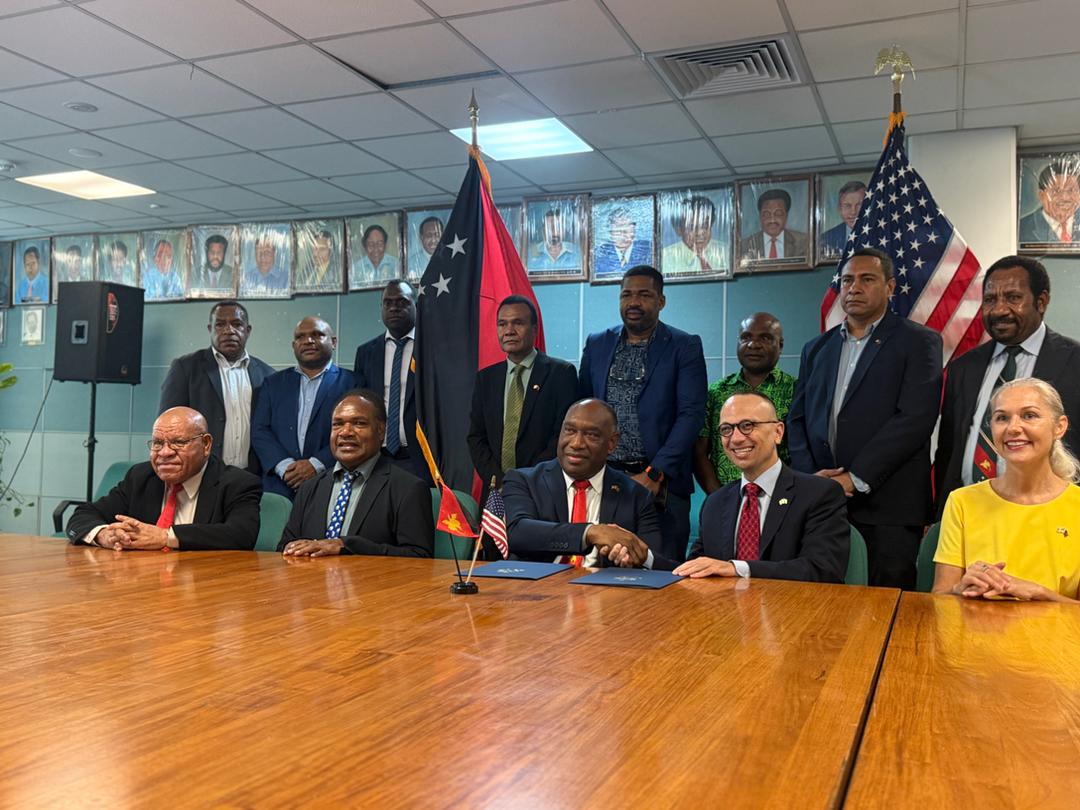
Papua New Guinea’s National Department of Health has welcomed a new Memorandum of Understanding (MOU) signed with the United States, describing it as a significant step toward strengthening the country’s health system and improving nationwide service delivery.
Minister for Health Elias Kapavore said the agreement marks the first of its kind between Papua New Guinea and the United States Department of State in the health sector, and reflects years of cooperation that began with earlier U.S. initiatives such as the President’s Emergency Plan for AIDS Relief (PEPFAR).
He acknowledged the presence and contributions of key stakeholders involved in the agreement process, including officials from the U.S. Embassy, the Department of Foreign Affairs, the Department of Information and Communication Technology, and the Office of the State Solicitor.
He said their coordination and legal oversight were essential in ensuring the agreement aligned with national frameworks and requirements. According to the Health Minister, discussions on the new arrangement began in November 2025 and have progressed over the past six to seven months.
He noted that the updated partnership represents a shift in approach from disease-specific, or “vertical,” programs toward a broader, integrated “horizontal” health systems model.
Kapavore said, “In the past, support for HIV programs was largely verticalized. This MOU reflects a new direction where we are working to strengthen the entire health system across all 22 provinces.”
He added that the previous model of assistance had been largely concentrated in specific areas, whereas the new framework aims to expand health system strengthening nationwide.
Kapavore said the agreement builds on decades of cooperation with the United States, evolving from earlier targeted HIV interventions into a more comprehensive partnership designed to improve health service delivery across Papua New Guinea.
The Minister described the MOU as a timely and strategic development, aligning both countries’ efforts to enhance health outcomes and build long-term system resilience.