

The upgraded Gurney Airport in Alotau has officially opened as the first of five major airport projects under Papua New Guinea’s Civil Aviation Development Investment Project Phase II, following a K76.8 million investment supported by the Asian Development Bank.
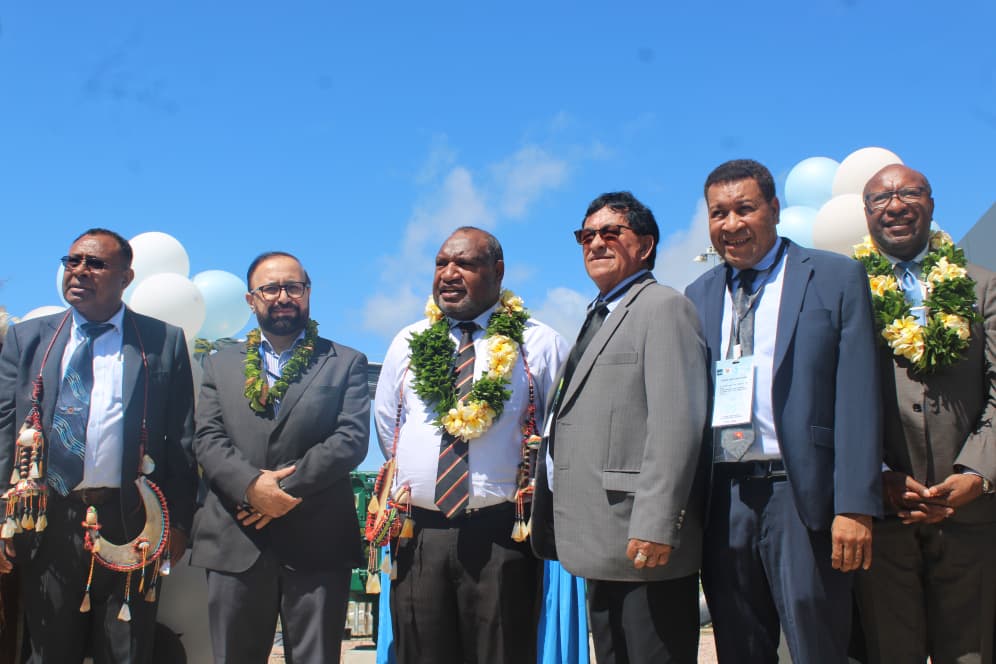
Prime Minister James Marape, Civil Aviation Minister Douglas Tomuriesa, Milne Bay Governor Gordon Wesley, and National Airports Corporation (NAC) officials joined development partners and local leaders for the official opening on Friday, August 21, 2026.
The project includes a new terminal building, upgraded runway, apron and taxiway, airfield lighting, standby power, water facilities, staff residences, and cargo storage facilities.
Construction began on April 15, 2024, with the project awarded to China Railway Construction Engineering Group Corporation Limited. The revised completion date was August 14, 2026.
The upgrade is expected to improve passenger processing, aviation safety and aircraft operations while strengthening Gurney Airport’s capacity to support economic activity and connectivity across Milne Bay.
Prime Minister Marape thanked the Asian Development Bank for its continued support of PNG’s infrastructure development, saying the bank had remained a development partner during periods when other partners reduced their involvement.
“ADB has emerged as the biggest supporter of many of our development work in roads, in airports, in schools. I just want to say thank you again on our 50th anniversary year and as we step on into our 51st, ADB, you have been certainly a wonderful partner,” Prime Minister Marape said.
He said the Gurney project demonstrated how concessional borrowing could be used to finance infrastructure that provides public services while generating economic activity capable of supporting repayment.
“You borrow cheaply to finance an infrastructure that can pay itself out over time whilst giving service to our people. This is good borrowing.”
The Prime Minister stated that the project was financed at an interest rate of less than 3 percent, with repayments scheduled to begin in 2028.
He said the Government must now ensure the infrastructure generates economic activity and returns to the economy, the country and local communities.
“So, partnering with ADB, we have borrowed responsibly and investing in assets all over our country. It is now our job to make sure these assets earn on investment and there is a return on investment to the economy, to the country and to the local community.”
Prime Minister Marape also acknowledged NAC, Civil Aviation agencies, and China Railway Construction Engineering Group for their roles in delivering the project.
He noted that the airport was opened 819 days after the project was launched in Alotau in 2024.
“Everyday matters. No day must be wasted. Every day matters in doing work for our country.”
Meanwhile, NAC stated that the upgrade will extend the runway and pavement lifespan by 15 to 20 years, improve passenger processing and safety, and allow the expanded apron to accommodate larger aircraft, including the Fokker 100, Boeing 737 and Air Niugini’s A220.
Milne Bay Governor Gordon Wesley also shared similar sentiments noting that the upgraded airport should also strengthen connections between Alotau and the province’s outer islands and remote communities.
He called for district airstrips to be certified and maintained so communities outside Alotau can benefit from the improved aviation infrastructure.
“We need these district airstrips to be certified and operational so that our people in the outer islands can share in the benefits of this upgrade,” Governor Wesley said.
He specifically identified the Losuia, Misima and Guasopa airfields as needing to meet regulatory requirements and become operational as feeder airports to Gurney.
Furthermore, Civil Aviation Minister Douglas Tomuriesa said the opening was part of the Government’s broader aviation development program, with further projects under CADIP II continuing across the country.
He also called on the people of Milne Bay to take ownership of the new facility and protect it from damage and vandalism.
“Let us take ownership of this terminal. Let us keep this terminal clean. Let us treat staff and passengers with respect. That famous Milne Bay hospitality. Let us protect this asset from vandalism and damage,” Minister Tomuriesa said.
The wider CADIP II program is valued at US$171.5 million and covers five major airport upgrades nationwide, alongside improvements to rural airstrips, weather facilities, information and communications technology, navigation systems and civil aviation capacity.
Gurney Airport is the first of the five major CADIP II airport projects to be completed, with the wider program continuing to upgrade aviation infrastructure and services across Papua New Guinea.