

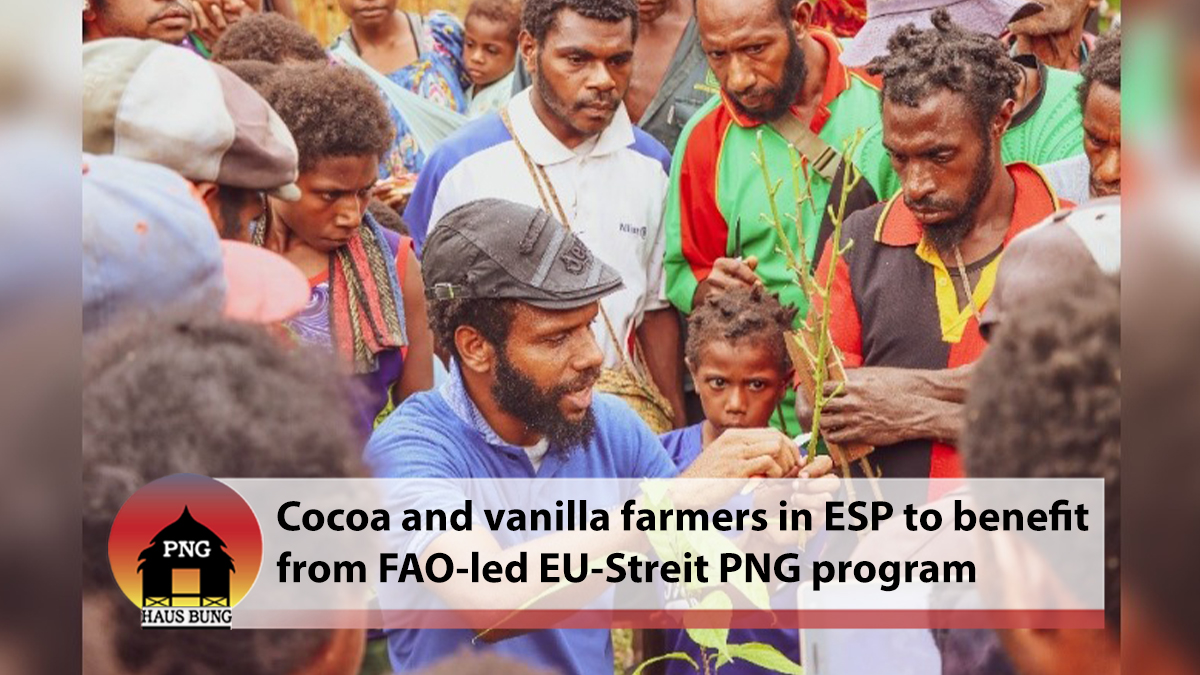
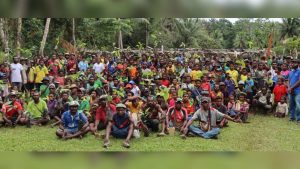
 The training was aimed at enabling cocoa farmers to replace old cocoa trees, including those affected by cocoa pod borer (CPB) pest, which has resulted in low production and loss in income for countless rural households.
Bud grafting is the latest innovative technique in cocoa cultivation which EU-STREIT PNG is promoting along with the distribution of 18 CPB tolerant species – recommended by the national Cocoa Board – among cocoa farming communities in the Sepik Region.
For the farmers, it was an awakening, learning opportunity they have been waiting for many years. “We know cocoa pod borer pest is the issue and the only way to address it is to rehabilitate with new cocoas. Through this programme, the EU-STREIT PNG, we can now be able to produce good quality cocoa to attract better markets,” said 62-year-old Michael Butehe, an active cocoa farmer and an elder in the village.
Shedding tears, the old-timer described EU-STREIT PNG as an intervention that will unfold a brighter future for his people. “We are cultivating cocoa ,but who will come and teach us how to cultivate and produce quality beans properly, but today the FAO through EU-STREIT PNG and PNG Cocoa Board is assisting us in moving forward from where we are,” added Mr Butehe.
The same 200 participants continued for another 2-day vanilla training on proper cultivation, husbandry and processing methods on 9-10 September. One highlight of the training was the introduction of a simple, efficient technique to pollinate vanilla flowers. The technique only requires lifting the rostellum, which acts as a shield between the stamen and stigma, and then pressing the stamen with the thumb gently down to the stigma for successful pollination.
The training was aimed at enabling cocoa farmers to replace old cocoa trees, including those affected by cocoa pod borer (CPB) pest, which has resulted in low production and loss in income for countless rural households.
Bud grafting is the latest innovative technique in cocoa cultivation which EU-STREIT PNG is promoting along with the distribution of 18 CPB tolerant species – recommended by the national Cocoa Board – among cocoa farming communities in the Sepik Region.
For the farmers, it was an awakening, learning opportunity they have been waiting for many years. “We know cocoa pod borer pest is the issue and the only way to address it is to rehabilitate with new cocoas. Through this programme, the EU-STREIT PNG, we can now be able to produce good quality cocoa to attract better markets,” said 62-year-old Michael Butehe, an active cocoa farmer and an elder in the village.
Shedding tears, the old-timer described EU-STREIT PNG as an intervention that will unfold a brighter future for his people. “We are cultivating cocoa ,but who will come and teach us how to cultivate and produce quality beans properly, but today the FAO through EU-STREIT PNG and PNG Cocoa Board is assisting us in moving forward from where we are,” added Mr Butehe.
The same 200 participants continued for another 2-day vanilla training on proper cultivation, husbandry and processing methods on 9-10 September. One highlight of the training was the introduction of a simple, efficient technique to pollinate vanilla flowers. The technique only requires lifting the rostellum, which acts as a shield between the stamen and stigma, and then pressing the stamen with the thumb gently down to the stigma for successful pollination.
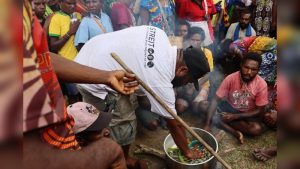 “The advantage of this method is the speed and accuracy of pollinating vanilla flowers in the morning between 6:30 am to 10:30 am, which is the best time for pollination,” explained the FAO National Vanilla Production Officer and Training Facilitator Mr Nanda Siri.
All participants had the opportunity to practice this pollination technique during practical sessions and picked up the skills very quickly. “With this new knowledge, I can now do pollination well to produce good quality beans for a higher income to support my children’s school fees,” said Lois Sambrehel, a single mum with three teenage children.
The trainings in cocoa and vanilla aimed to fill in the knowledge gaps farmers have in the production process. These 200 lead vanilla farmers are expected to pass the technique they mastered to at least 2000 vanilla farmers in the area.
“The advantage of this method is the speed and accuracy of pollinating vanilla flowers in the morning between 6:30 am to 10:30 am, which is the best time for pollination,” explained the FAO National Vanilla Production Officer and Training Facilitator Mr Nanda Siri.
All participants had the opportunity to practice this pollination technique during practical sessions and picked up the skills very quickly. “With this new knowledge, I can now do pollination well to produce good quality beans for a higher income to support my children’s school fees,” said Lois Sambrehel, a single mum with three teenage children.
The trainings in cocoa and vanilla aimed to fill in the knowledge gaps farmers have in the production process. These 200 lead vanilla farmers are expected to pass the technique they mastered to at least 2000 vanilla farmers in the area.
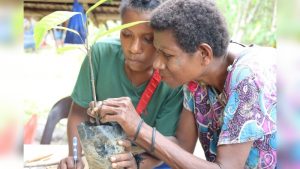 The EU-STREIT PNG Programme continues to guide, mentor and work closely with the farmers , supporting them to increase both the quality and quantity of vanilla beans they produce
The EU-STREIT PNG, being implemented as a UN Joint Programme (FAO as leading agency/administrative agent, and ILO, ITU, UNCDF and UNDP as implementing partners), is the largest grant-funded Programme of the European Union in the country and the Pacific region, which focuses on increasing sustainable and inclusive economic development of rural areas through increasing the economic returns and opportunities from cocoa, vanilla and fishery value chains and strengthening and improving the efficiency of value chain enablers including the business environment and supporting sustainable, climate-proof transport and energy infrastructure development.
The EU-STREIT PNG Programme continues to guide, mentor and work closely with the farmers , supporting them to increase both the quality and quantity of vanilla beans they produce
The EU-STREIT PNG, being implemented as a UN Joint Programme (FAO as leading agency/administrative agent, and ILO, ITU, UNCDF and UNDP as implementing partners), is the largest grant-funded Programme of the European Union in the country and the Pacific region, which focuses on increasing sustainable and inclusive economic development of rural areas through increasing the economic returns and opportunities from cocoa, vanilla and fishery value chains and strengthening and improving the efficiency of value chain enablers including the business environment and supporting sustainable, climate-proof transport and energy infrastructure development.