

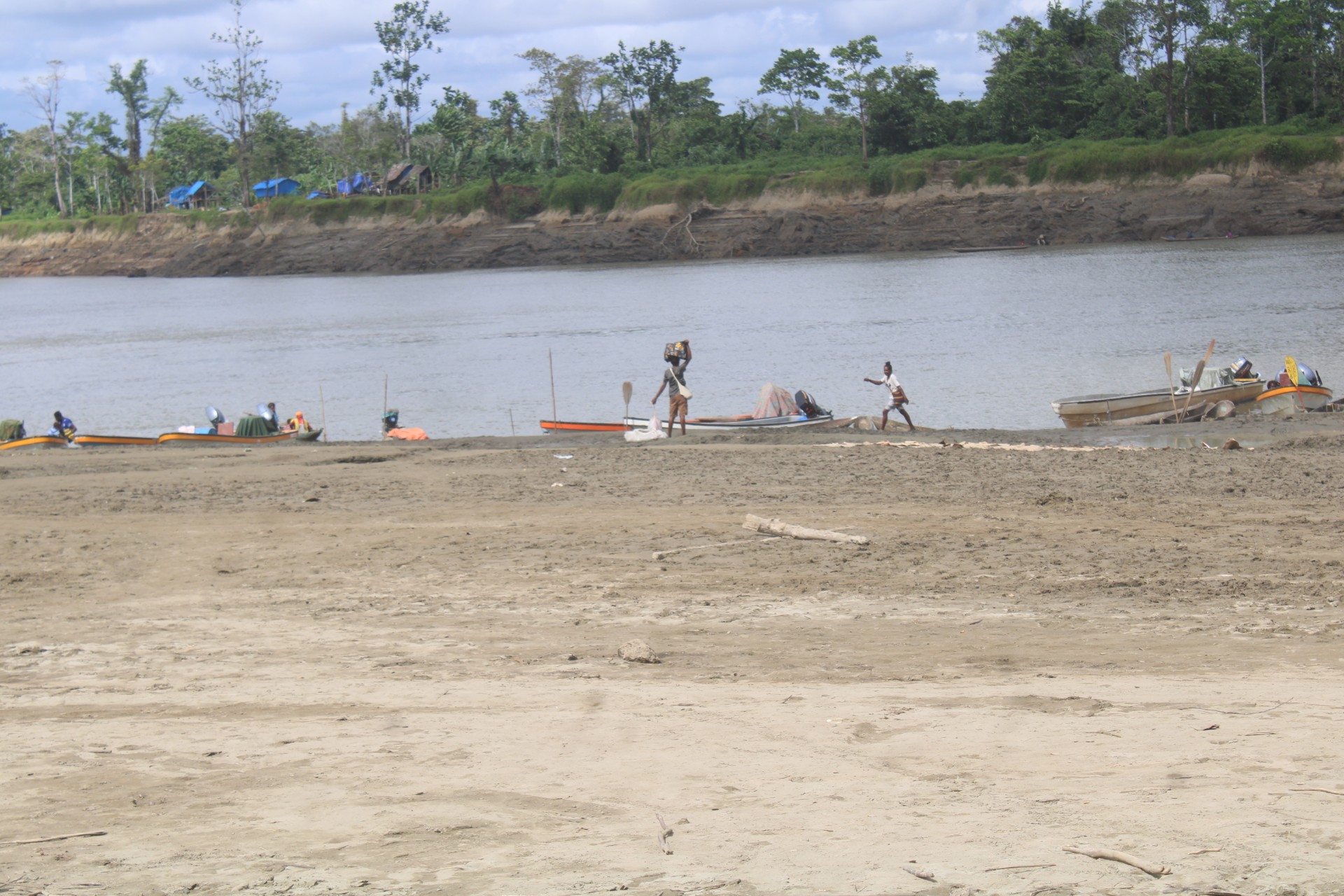
Residents across Western Province are facing increasing hardship as an extended dry season continues to affect communities, leaving many families struggling to access clean water.
For more than a month, Kiunga and surrounding areas in the North Fly District have received little to no rainfall, causing water shortages that are impacting
daily life.
Small creeks, streams, water wells and household tanks that residents rely on for drinking, cooking and washing have either dried up or are rapidly running out of water.
Kiunga resident and parent, Taita Parau, said her family has been forced to walk long distances in search of water.
"All our tanks have dried up. We are now fetching water from wells that are not clean and boiling it before drinking. The continuous sunny weather in Kiunga is drying up the wells we used to depend on," she said.

Many residents in Kiunga town and nearby settlements are no longer able to rely on water tanks and are travelling to Sare Kona and Hongas Kona settlements to access the few remaining wells.
Another resident, Ansel Bot, said the situation has become increasingly difficult for families.
"The water wells and small creeks we used for washing dried up last week. My family and I have dug several wells, but there is still no sign of water. We now have no choice but to wash in the dirty waters of the Fly River," he said.
As the dry conditions persist, many residents continue digging wells in search of underground water, although much of the water found is unsuitable for drinking without treatment.
Concerned youth leader Moxcy Bainge said the prolonged lack of rainfall has left communities desperate for a more sustainable solution.
"Our water tanks have dried up, and we are travelling to Sare Kona to fetch water. We cannot continue to suffer like this. What we need now are water bores in our settlements so that people can continue to access water," he said.
Some residents are also travelling along the Kiunga-Tabubil Highway to wash and collect water from any available sources.
The prolonged dry season is not only affecting households but is also beginning to impact transportation and business activities in the province.
The water level of the Fly River has reportedly fallen by six metres and continues to decline, making it increasingly difficult for cargo vessels to access the Kiunga Wharf.
Business operators in Kiunga have indicated that current stock levels may only last another two to three months if dry conditions continue and transportation along the river becomes further restricted.
Residents have also reported unusually cold nights and mornings, conditions many say are unlike anything experienced in recent years.
The effects of the dry season are being felt across the province, including in the Middle Fly, Delta Fly and South Fly districts.
Speaking on behalf of many residents, Mr Bainge appealed to the Fly River Provincial Government to prioritize the installation of water bores in affected communities.
"There are many swampy areas around us, and if we dig deep enough there is still water underground. Water bores are what our communities need right now," he said.

Meanwhile, Western Governor Taboi Awi Yoto said in a social media update last week that the Fly River Provincial Government has already allocated funding, with support from development partners, to assist with initial relief operations and emergency response activities should the dry conditions worsen.
As the dry season continues, communities across Western Province remain hopeful that relief measures, including the installation of water bores, can help ease the growing water crisis.