

Cardinal Sir John Ribat has called for urgent government intervention to address Papua New Guinea's growing HIV epidemic, warning that years of declining investment and weakened prevention programs have allowed infection rates to rise sharply.
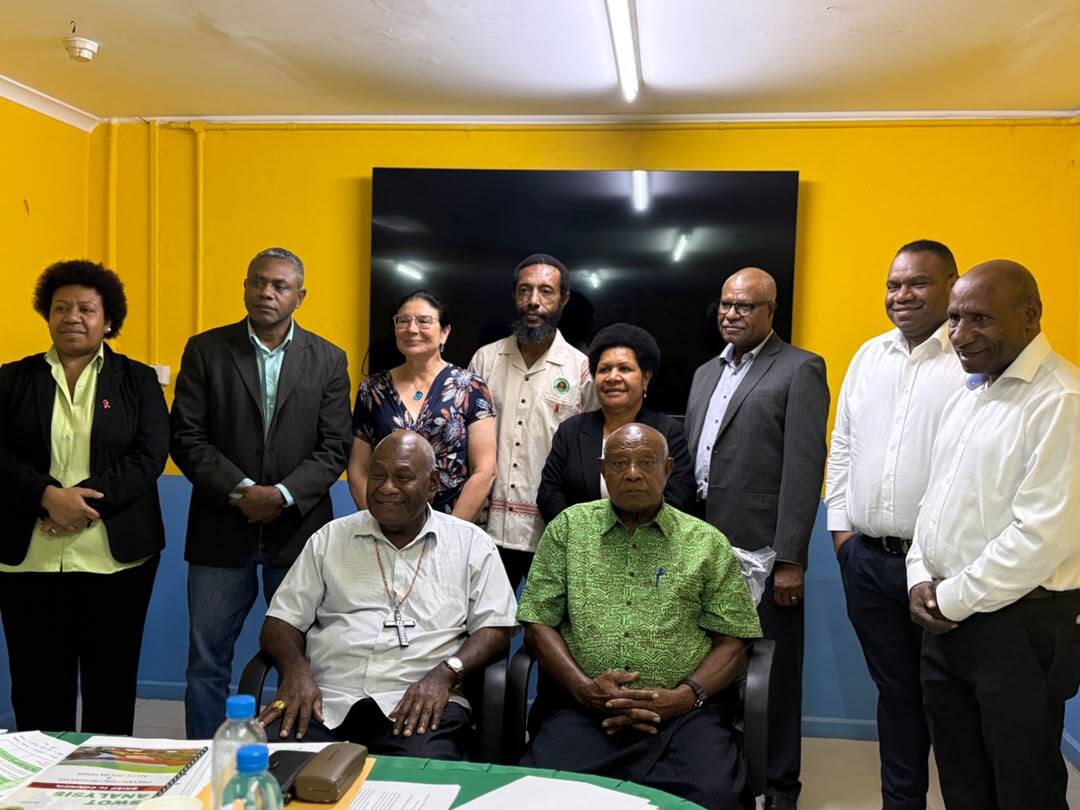
Speaking to its thirteen (13) members of the National AIDS Council and key stakeholders, Cardinal Ribat said HIV and AIDS must once again become a national priority, urging leaders to strengthen prevention, treatment and public awareness efforts before the situation worsens.
"We continue to hear of people dying, but there is very little understanding of how they died," Cardinal Ribat said. "It is important that we continue to encourage our people to know the reality of HIV/AIDS."
The Cardinal reflected on the achievements of the National AIDS Council in its early years, saying strong leadership, partnerships and coordinated policies had helped reduce the national HIV infection rate from an anticipated 3.5% to just 0.4%, describing it as a global success story.
However, he said those gains have been steadily reversed over the past 14 years.
"Today the infection rate has increased from 0.4% to 1.5%," he said. "Many people believe HIV has gone away, but it has not. Awareness has declined and people are no longer treating it as a serious issue."
Cardinal Ribat highlighted several worrying trends, including a reported 300% increase in the commercial sex industry, a 34% rise in mother-to-child transmission and a 120% increase in infections among the general population.
He described as "shameful" in the fact that seven children are reportedly born with HIV every day in Papua New Guinea.
"This must be stopped and reversed," he said.
The Cardinal also expressed concern over the decline in the capacity of the National AIDS Council Secretariat (NACS), saying staffing levels had fallen significantly after many officers were transferred to the National Department of Health (NDoH).
He said the agency now requires restructuring, so it can effectively coordinate HIV prevention programs across the country.
Cardinal Ribat warned that annual funding for HIV/AIDS programs has dropped dramatically, from about K30 million to just K2 million, which he said is insufficient to support nationwide awareness campaigns.
He said, "It is only enough to fund two television advertisements. It will not fund billboards, radio advertisements, social media campaigns, or other public awareness activities."
He argued that investing and prevention would save the country significant economic losses, estimating that neglecting HIV/AIDS could cost PNG hundreds of millions of Kina annually through reduced productivity and increased healthcare costs.
"The mathematics is simple. An investment of K20 million annually in prevention and management programs can protect the country from much greater economic losses," he said.
Cardinal Ribat also noted that international funding for HIV programs has declined as donor countries redirect resources to other global priorities, placing greater responsibility on the PNG Government to increase domestic funding.
He called on the government to conduct a comprehensive review into what has gone wrong over the past decade and to develop a new national HIV/AIDS policy that integrates prevention, treatment and long-term planning across all sectors.
The Cardinal urged stronger partnerships between government agencies, churches, community organisations, the private sector and international development partners to improve service delivery and expand prevention and treatment programs.
He also called for increased investment in modern HIV medicines, including oral and injectable treatments, to help suppress viral loads and reduce transmission.
Cardinal Ribat told the council members that this is their priority job.
"We must work together to bring HIV/AIDS back to the forefront of national attention and protect the lives of our people."