

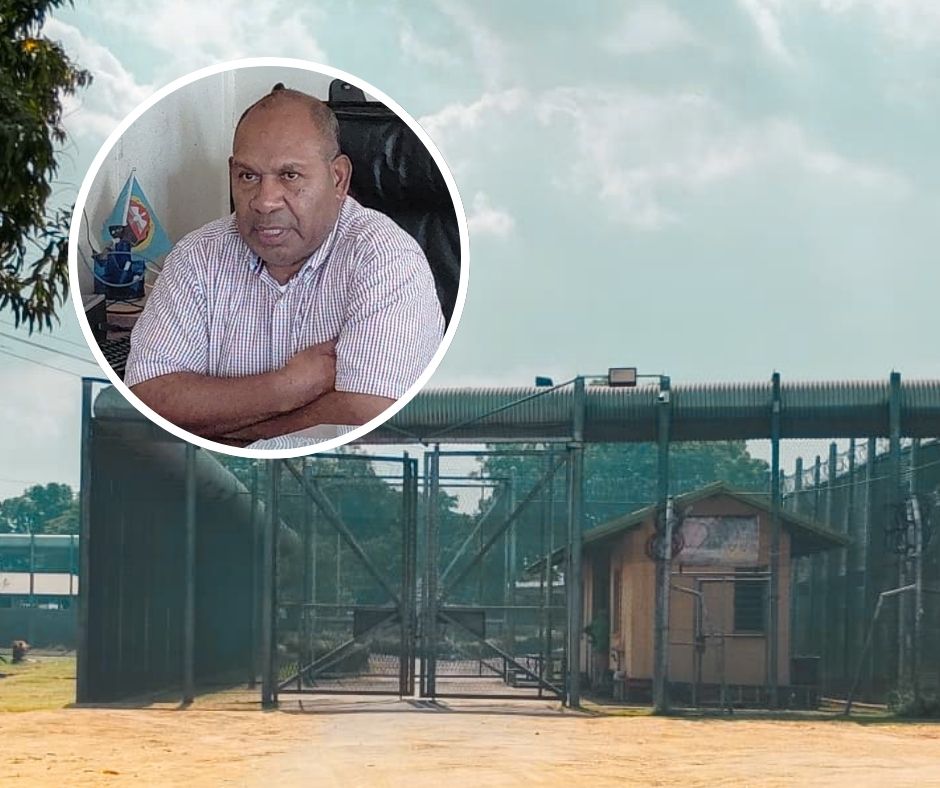
Bomana Prison Camp, located just outside Port Moresby, is facing a growing overcrowding crisis with inmate numbers now far exceeding the facility’s intended capacity.
This according to Commanding Officer Chief Superintendent Yelly Oiufa who stated that the prison currently houses an estimated 1, 050 male inmates, including juveniles, which has placed increasing pressure on accommodation and daily operations within the correctional facility.
“The total inmates here in Bomana, including juveniles, is about 1, 050, while in 2014 and 2015 we had about 600 to 700 inmates,” Oiufa said.
Despite the rising inmate population and operational demands, the prison camp currently has only around 200 officers managing the facility.
He said cells originally designed to accommodate about 35 inmates, are now housing more than 60 prisoners each.
“This is a concerning issue in terms of human rights; however, we are only looking after them while the government is responsible to provide the support.”
The inmate population includes more than 60 female inmates, while 137 Indonesian nationals are currently serving sentences related to illegal fishing offences.
“Currently we have 137 illegal fishing offenders from Indonesia that the court has given two years to serve,” he said.
According to Chief Superintendent Oiufa, additional illegal fishing offenders are expected to arrive at the facility following ongoing enforcement operations by fisheries authorities.
In addition, the overcrowding situation has also placed an increasing strain on food supplies and prison resources.
He explained that much of the prison’s funding is now directed toward food rations, leaving limited funding available for maintenance and other operational needs.
He also said that the prison’s monthly food costs currently range between K265, 000 and K300, 000 due to the increasing inmate population.
“Currently, we have not received a cheque for nearly three months now.”
The Chief Superintendent also raised concerns about deteriorating infrastructure within the prison camp, noting that many buildings were constructed during the 1960s and 1970s.
“There has been some development, but most of the buildings inside the compound were built in the 1960s and are still being used today.”
He also stated that several facilities were not originally designed for their current use, including the Commander’s Office, which was previously a residential home before being converted into an office space.
The prison's location near the Brown River, locally known as Bomana Wara, has also created additional safety concerns during periods of heavy rainfall.
Oiufa said flooding regularly affects access roads into the prison camp, making it difficult for vehicles to enter the facility and disrupting prison operations.
He warned that continued flooding could eventually threaten inmate accommodation areas.
“Last year in December it was very bad,” he said.
The concerns highlight increasing pressure on Papua New Guinea’s correctional system as authorities continue to deal with overcrowding, ageing infrastructure, and limited operational resources.