

POSTS BY AUTHOR

PNG Haus Bung
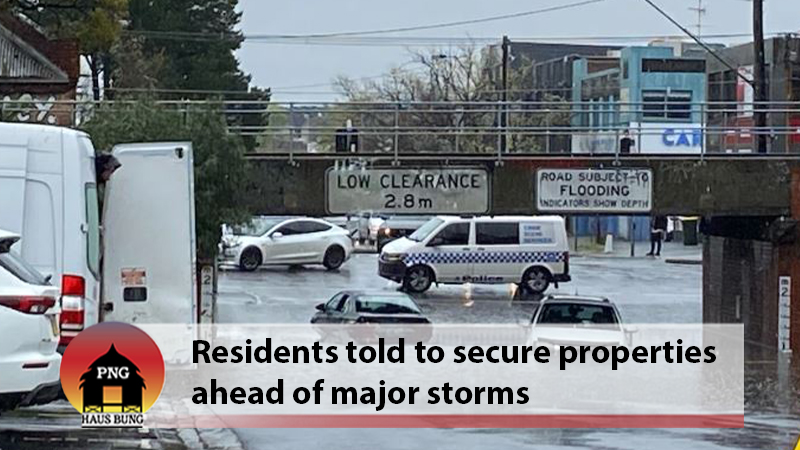 VICTORIAN RESIDENTS WARNED TO AVOID FLOODWATER
Victorians are being warned a storm forecast to be the biggest of the year could cause flooding across the state on Thursday.
Premier Daniel Andrews said full catchments and saturated ground had elevated the flood risk across the state.
"Even a minor amount of rain would be a risk in terms of flooding, but it's not a minor rain event that we are forecasting," Mr Andrews said.
"It'll be significant rainfall in certain parts of the state and that will pose a flooding risk to communities in lots of different places."
The effects of a third successive year of La Niña are being felt across the country, with tropical moisture building over the top end of Australia.
The Bureau of Meteorology (BOM) said a combination of warm water and air moisture was bringing increased rainfall to the south-east of the country.
BOM meteorologist Kevin Parkyn said the heavy rainfall last week was a "pulse" of the tropical moisture, with the rain this week expected to be more significant.
[caption id="attachment_28264" align="alignnone" width="702"] Days of heavy rain flooded properties across Victoria last week.(Supplied: Rod McErvale)[/caption]
Mr Parkyn said he was most concerned with the intensity of the rain which was expected to peak on Thursday.
"Wednesday is a day when we'll see showers and storms build across Victoria as the day unfolds," he said.
"The real concern though is from the very early hours of Thursday morning right through to Friday morning where we're expecting widespread falls of 20 to 50mm across much of Victoria.
"I can't stress the importance that Thursday is very much a flash flood, heavy rain day. Be prepared."
SES tells residents to prepare for flooding
Short-term flash flooding is being forecast, while longer term riverine flooding is also expected.
Victoria's State Emergency Service (SES) has asked residents to begin preparing for the storm.
"Now is the time to be clearing out your storm pits, your gutters around your house and making sure you don't have any debris lying around that may become a missile during strong winds," SES chief officer Tim Wiebusch said.
The SES said residents in flood-prone areas should prepare for up to 72 hours of potential isolation.
Mr Wiebusch said residents should be aware that roads would be cut off due to the expected flooding and asked anyone who must travel to plan accordingly.
"This Thursday, we're asking people to avoid driving across particularly the northern parts of the state with these flash floodwaters that will be about," he said.
"Don't drive into flash floodwaters, because it could be the last decision you ever make."
[caption id="attachment_28265" align="alignnone" width="698"] Continued rainfall has lead to overflowing rivers and dams across Victoria.(Facebook: Mele Jane) [/caption]
Victorians in the state's north have been told they are most at risk from flooding, with hundreds of thousands of sandbags to be made available at local collection points in high-risk areas.
Residents have not yet been asked to evacuate but updates will be posted on the Vic Emergency app should conditions change.
Seven helicopters and hundreds of generators are on stand-by around Laverton, in Melbourne's west, to help residents deal with flash-flooding where needed.
Mr Andrews also said the government had prepared "community containers", which could provide communities isolated by floodwaters enough supplies to sustain 50 people for five days.
No formal request has been made to the Australian Defence Force for support, but Mr Andrews said he would not hesitate to seek support if necessary.
Meanwhile, regional communities are bracing for more wet weather following last week's downpours.
In Charlton, a town of 1,100 halfway between Melbourne and Mildura, the Avoca River peaked at 6.78 metres on Monday night.
The peak was just shy of the moderate flooding level, after heavy rain upstream made its way down the river.
But local residents told the ABC they feared with more rain forecast, the risk of flooding remained serious.
Authorities said the wet conditions would also affect Tasmania, New South Wales and parts of South Australia.
Source: ABC News
Published on October 11, 2022
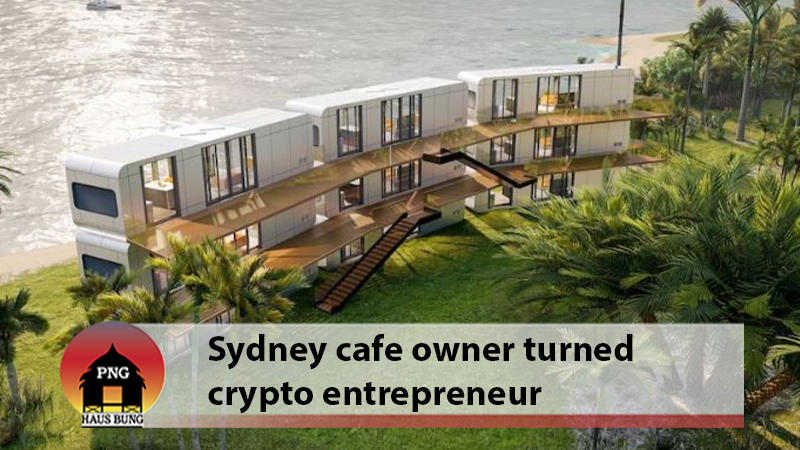 SATOSHI ISLAND PROJECT AIMS TO TURN A REMOTE PACIFIC ISLAND INTO A CITY BUILT ON CRYPTOCURRENCY
The proposal was ambitious: to turn a remote, overgrown Pacific island into a private city, built entirely on cryptocurrency.
People buying real estate on the island wouldn't get traditional land deeds. Instead they would receive digital non-fungible tokens (NFTs), which have more famously been used to certify artwork.
"One day I got contacted, and [was asked]: 'Hey, would you be interested in running operations? We've got this great idea'," Mr Troyak said.
Mr Troyak was hooked. Without visiting Vanuatu where the project would be based, he agreed, becoming the project's logistical director and spokesperson.
[caption id="attachment_28246" align="alignnone" width="702"] This digital mock-up shows a plan to turn a remote Vanuatu island into a thriving city built on cryptocurrency.(Supplied: Satoshi Island)[/caption]
Earlier this year, Mr Troyak shut his busy Surry Hills cafe and moved to the Pacific country of Vanuatu to live and work full-time on Satoshi Island.
The project is named after Satoshi Nakamoto, the pseudonym used by the creator of the digital cryptocurrency, Bitcoin.
For those steeped in the world of cryptocurrency, Satoshi Island is a fantasy coming to life, a revolutionary experiment to create a new, decentralised society built entirely on cutting-edge technology.
The team behind it are committed to making that dream a reality.
Ardent supporters have already snapped up plots on the remote island using cryptocurrency, buying "Land Deed NFTs" stored on the blockchain.
However, with a litany of logistical and legal hurdles between the vision for Satoshi Island and its reality, experts say investors need to be wary, and fear the project may eventually fall flat or run foul of local laws.
A crypto island experiment
The company's slick website promises Satoshi Island will soon transform into a high-tech city, built from the ground up by a global community of cryptocurrency enthusiasts.
Hundreds of families are set to live in oblong, modular homes, stacked on top of each other like massive glass Lego blocks by the sea.
Their goal is for every aspect of people's lives to be mediated by cryptocurrency.
Coffee and rent could be paid for with digital currencies like Bitcoin and Ethereum.
Cryptocurrency startups are being encouraged to buy land to create a commercial centre for the digital economy.
Proponents such as Satoshi Island's architect, James Law, said it could be a real-world case study for what a future community might look like, governed entirely online by the blockchain.
"I think we are very brave entrepreneurs who are putting our skills and resources into the project, earnestly trying to make it into something truly special," he said.
[caption id="attachment_28247" align="alignnone" width="707"] Satoshi Island is located off the eastern coast of Vanuatu's largest island.(ABC News: Jarrod Fankhauser)[/caption]
Most countries, including Vanuatu, don't recognise digital currency as legal tender, nor do they have regulations to oversee crypto markets, which are notoriously unstable, making it risky to trade or invest in them.
However, Satoshi Island is attempting to remove many barriers to crypto trading.
Instead of national banks, politicians or courts controlling the community, the company hopes to use blockchain — a technology that can store information without risk of it being changed, hacked or corrupted — to ensure money or property isn't stolen.
'Doesn't stand up to scrutiny'
It sounds utopian, and for sceptics like software engineer and prominent cryptocurrency critic Molly White, that's the point.
She said Satoshi Island was just one in a "long line" of naive cryptocurrency projects set on tropical islands.
"There's been a lot of energy and money put into convincing people that this is the future of technology, the future of the web, the future of society," she said.
"A lot of that really just doesn't stand up to scrutiny. But it does work very well for convincing people to put their money into it."
Ms White said "less-glamorous" aspects — such as waste management on a remote island, food distribution and even electrification — were not considered in many crypto island plans.
Blockchain as an 'exit from nation states'
Ellie Rennie, from RMIT University's blockchain innovation hub, said there was potential for blockchain technology to re-imagine how societies might operate.
"They're often talking about the possibilities of automating certain functions of the state," Professor Rennie said.
"Many of those tasks can be done through technologies more efficiently and, so, that raises the possibility of alternative societies forming and alternative nations."
However, she added, it was "too early" to predict if any of the proposed cryptocurrency utopias would work, and with that uncertainty there was risk.
"In some cases, they are experiments in doing things differently. They're a form of exit from nation states," she said.
"The problem is that others can pick up on these narratives and hopes and ideologies and exploit them for financial gain."
[caption id="attachment_28248" align="alignnone" width="695"] Satoshi Island's homes have been developed by Hong Kong-based architect James Law.(Supplied: Satoshi Island)[/caption]
Private land sales 'not possible'
At the moment, the island — called Lataro by locals — is an unruly, tropical forest.
It's about 800 acres, a bit bigger than Sydney's CBD, and "90 per cent untouched by man", according to a real estate notice advertising the island.
The island is mostly uninhabited, but a family of Indigenous landowners have ultimate custody of the land, and can lease it out to companies such as Satoshi Island to develop and use.
Philip Warele negotiated the deal with Denys Troyak and the Satoshi Island company.
He does not know much about cryptocurrency but is optimistic about the opportunities that Satoshi Island offers.
"We knew it would improve the economy of Vanuatu and bring money into the country," he said.
Mr Troyak and the team have employed around 10 members of his family, and Mr Warele says another 10 will join the team soon.
The company also made payments to Mr Warele's family — another reason why he says he is happy for the partnership.
As to whether Satoshi Island investors can buy physical property with cryptocurrency, Mr Warele said that would be impossible.
"My understanding is that they're not selling plots, but they're just renting out the plots," he said.
"There's one man who has paid for a lease, so we have an agreement with him. But, for him to sell land inside the island, that's not possible."
Mr Troyak told the ABC "one cannot own land in Vanuatu" and "NFT holders have exclusive rights to the blocks of land on Satoshi Island".
But he did not elaborate on why the company's website and promotional material states "anyone can own a piece of the island".
Is it a scam?
Although they don't give any property rights to customers, the asking prices for Satoshi Island Land NFT Deeds range from $900 to $11,000.
In January, the Vanuatu Financial Services Commission (VFSC) issued a public notice which said the operation "could be a scam".
[caption id="attachment_28249" align="alignnone" width="697"] According to local reports, 90 per cent of the island used to be a Conservation Reserve for Vanuatu's endangered coconut crab.(Supplied: Satoshi Island)[/caption]
The financial services regulator said that, because Satoshi Island did not have a licence to trade in digital assets, what it was advertising online was false and misleading.
A few months later, Satoshi Island claimed the notice was damaging to their business and took legal action against the commission.
VFSC said it had to remove the notice while the case was pending, and that the matter was still before the Vanuatu courts.
Mr Troyak did not respond to ABC's questions about why his company took legal action against the VFSC.
In February, Vanuatu's acting financial minister, Johnny Koanapo Rusao, told the ABC he supported Satoshi Island in principle, but said that Vanuatu's legislation needed to be updated to provide adequate oversight on the project.
"We need to have legislations updated so they can absorb the implementation of the cryptocurrencies," he said.
Mr Troyak said Satoshi Island's legal team were ensuring the project would be lawful.
"We feel very strongly that the legislations of the Vanuatu government will come through, and it's going to be friendly to us," Mr Troyak said.
"We're going to make sure we go through to our lawyers locally, and make sure everything is clear."
Professor Rennie said there was a "clear precedent" of cryptocurrency schemes making promises they they could not fulfil, and urged potential investors to be cautious.
"There's a very fine line between a scam and a failed business project," she said.
"Ultimately, it's up to anyone who is interested in participating in these things to look very, very closely at what they think it is, and to know the risk."
'Flexible' laws and murky ownership rights
According to Vanuatu's land management department, Mr Troyak and his team do not have the rights to Lataro Island.
In lease title documents obtained by ABC, the Satoshi Island company is directed by Theresa Jane Allen, a long-time property developer in Vanuatu.
The ABC was unable to contact Ms Allen, and her name is not listed on Satoshi Island's website, promotional material, nor on any of the company's NFT land agreements.
Mr Troyak said Ms Allen was "not part of the Satoshi Island team", and said Satoshi Island's Land Deed NFTs were sold by another organisation, registered as a non-profit in the Marshall Islands.
He did not answer questions about who financially benefits from the Satoshi Island project.
Despite lack of clarity around the company's ownership, legal experts say it is unlikely the company would face barriers in Vanuatu's courts.
Vanuatu lawyer Didier Hamel-Landry said that, as long as investors were clear they could not buy Vanuatu land using NFTs, Satoshi Island's activities were lawful.
"In Vanuatu law, there's enough flexibility in the legal system and in the rules for such a project to go ahead and to exist," Mr Hamel-Landry said.
[caption id="attachment_28250" align="alignnone" width="696"] Lawyer Didier Hamel-Landry says the project is legally sound. (Supplied: Didier Hamel-Landry )[/caption]
Compared to countries such as Australia, Mr Hamel-Landry said Vanuatu did not have robust tenant, property or foreign investment rights.
Instead, he said, land agreements — such as the one with Satoshi Island — were made personally between customary landowners and developers.
"It doesn't guarantee that it's a good idea and a sound investment, of course … My advice to anyone investing in that particular project, or any project generally, would be to make serious due diligence and look at who they're dealing with," he said.
Supporters undeterred
Ms White said underdeveloped property laws could be the reason why cryptocurrency enthusiasts experimented in countries like Vanuatu.
"The reason that they want to do this in some remote island versus in London or New York City or someplace that is fairly established already, is that they want to create basically a micronation, where they can create their own rules," she said.
"I think the majority of people who are actually putting money into these projects are speculating … are hoping to flip the NFTs, based on news coverage."
Satoshi Island is one of a number of blockchain and cryptocurrency experiments in the Pacific.
In Fiji, a similar cryptocurrency "paradise" called Cryptoland was attempted but, after being widely mocked, the project eventually ran aground for failing to secure the island.
Despite these concerns, some of Satoshi Island's supporters remain undeterred.
Monty Metzger — founder and chief executive of a blockchain platform called LCX — has long been a fan of Satoshi Island.
"Participating in Satoshi Island is a fun thing. I want to learn how they are doing it, and I want to see how much interest it will gain," he said.
"I'm always skeptical, but I'm also enthusiastic … I also would not put my life savings into it but rather participate, like being part of a club."
Source: ABC Pacific News
Published on October 11, 2022
 SP BREWERY WINS PLATE IN 2022 CORPORATE BOWLING CHALLENGE
South Pacific Brewery had an impressive finish in the 2022 Corporate Bowls challenge over the weekend by claiming the Plate shield.
SP Brewery beat an experience Lae Medical Services side, 18 points to 6 to claim the title.
The team attributed the victory to the spirit of “brewing the joy of true togetherness”.
“We played as a team and our team spirit was always on point therefore, we won despite being a newcomer to the competition,” says SPB staff and player Nellie Sikat.
"Almost every one of us on the team did not know much about bowling, but we gradually learn in the process of playing.”
A total of 16 corporate companies participated in the 7 weeks challenge.
Published on October 11, 2022
 INSIDE THE PACT DRIVING SAMOA TO TOPPLE WORLD CUP 'BIG DOGS'
Brian To’o and Jarome Luai have revealed how a pact to replicate Tonga’s rise at the 2017 World Cup inspired some of NRL’s biggest stars to commit to Samoa and are backing the Pacific nation to upset England in the opening match.
To’o and Luai are among six members of Penrith’s premiership winning team in the star-studded Toa Samoa squad, which includes State of Origin props Junior Paulo and Josh Papalii and teen sensation Joseph Suaalii.
Luai, Paulo and Papalii played for Samoa in 2017 but the Pacific nation didn’t win a match, while Tonga shocked New Zealand to turn the World Cup on its head and only missed the final after a controversial loss to England.
[caption id="attachment_28225" align="alignnone" width="862"] Brian To'o poses with the Provan-Summons Trophy and a Samoa flag after the grand final
[/caption]
Tonga have since beaten Australia and Great Britain to enter the World Cup as the No.2 nation behind the Kiwis, according to the IRL rankings.
However, many believe Samoa have a stronger squad, with playmakers of the calibre of Luai and Anthony Milford, while To’o was a certain selection on the wing for Australia before declaring his allegiance to the Pacific nation.
“We are obviously inspired by what Tonga did and the way they were playing for their jersey,” To’o said.
“It was more than just a game and it meant something to them. They were playing for their people and playing for their country. It is something that drives us to play for Samoa.
“I just really want to replicate what Tonga did. Imagine if Samoa could do that. It would change the game. The first match against England will be mad. It is something we are really looking forward to.”
When the World Cup draw was done two years ago, organisers couldn’t have envisaged what a drawcard Samoa would be and are now hoping for a crowd of more than 40,000 for this weekend's tournament opener in Newcastle.
[caption id="attachment_28226" align="alignnone" width="906"] Match Highlights: Samoa v Cook Islands
[/caption]
However, there is now the very real possibility of a Samoa upset setting the host nation, England, on a collision course to meet Tonga in the quarter-final and an early World Cup exit.
“It will be a good test for us to see how we go against one of the top dogs of the world,” Luai said.
“I have got an idea of how passionate England are about their sports and about their people, as well, so it will be a pretty crazy atmosphere to be a part of.
“I think there is a good pool of talent in the Samoa team, so we have a good chance against one of the top teams.”
To’o was the first Origin star to commit to Samoa and Luai, Panthers centre Stephen Crichton, Paulo and Papalii followed, along with Suaalii, who was tipped to be selected for the Kangaroos at just 19 years of age.
If Samoa are successful, their actions will be compared to Jason Taumalolo and Andrew Fifita turning their backs on New Zealand and Australia to play for Tonga at the 2017 World Cup.
“We are probably in the same boat as Tonga were in terms of just wanting to represent the mother land and commit because we can build something special,” Luai said.
[caption id="attachment_28227" align="alignnone" width="840"] Jarome Luai has previously played five Tests for Samoa
[/caption]
“It would mean a lot to us personally and we know what kind of effect it would have in the country and for Samoans everywhere if we can do something special at this World Cup.”
To’o said there was no pressure put on players to choose Samoa but once a few big names committed others followed and their squad is now so strong that there was no room for the likes of David Nofoaluma.
“I think some of the boys were a bit indecisive, but I was really happy with what I decided. and I think it spread,” To’o said. “Word got around quick, and it was cool to see the other boys commit to Samoa as well.
"I obviously made the first move by deciding my allegiances and a few of the boys followed, but we said that it was up to each player and no matter whether they chose Samoa or elsewhere we would support each other.”
With Samoa and Tonga on the same side of the draw, there is the possibility of the Pacific powerhouses and arch-rivals meeting in either a quarter-final or semi-final.
Australia and New Zealand are destined to play-off in the other semi-final and To’o said Samoa would back themselves against the Kangaroos.
“It would be a massive opportunity, given that the Kangaroos were the top team at the last World Cup, especially with all the top players in their squad. as well,” he said.
“It would be something to look forward to and a big challenge for us but I’m sure we would rise to the occasion.”
Source: NRL.com
Published on October 11, 2022
 MEMBERS UTILIZE NASFUND SERVICES AT THE 59th MOROBE SHOW
As part of its member engagement, Nasfund participated at the 59th Morobe Show.
Hosted at the Lae showground on Saturday 8th, and Sunday 9th October 2022, this event saw close to 1,500 Nasfund members from across Morobe and neighboring provinces, access the Fund’s services.
Nasfund Chief Executive Officer Ian Tarutia thanked the Fund’s members for utilizing this service at this event.
“Morobe Province accounts for over 111,000 Nasfund members from across 300 employers, which constitutes approximately 18% of the Fund’s total membership. The 59th Morobe Show provided a wonderful opportunity for the Fund to interact with our members, some of whom who may not have time during the week.
[caption id="attachment_28256" align="alignnone" width="642"] Nasfund members were able to take their pictures, to be issued new membership ID cards.[/caption]
Over the two days, our members were able to check their Nasfund account balances, update their membership details, register for the Fund’s Text-Bal and online services, and be issued new Nasfund membership ID cards.
The event also provided an opportunity for entrepreneurs involved in micro and small to medium enterprises (MSMEs) to register to save for retirement through the Fund’s Eda Supa product.
Furthermore, our team was also able to interact with representatives from our contributing employers, who also exhibited at this event, to discuss how best to work together to continuously improve our offering in Morobe Province.
We thank the Morobe Show Committee for providing this opportunity for the Fund to interact with our members.
First held in 1959, this show is one of the longest running annual events which showcases a variety of exhibits from across the agriculture, horticulture, livestock, commercial, industry, education and culture sectors – all sectors which provide a large part of our membership.We remain committed to working together with the Morobe Show Committee, so that our members are ready for tomorrow.”
Published on October 11, 2022
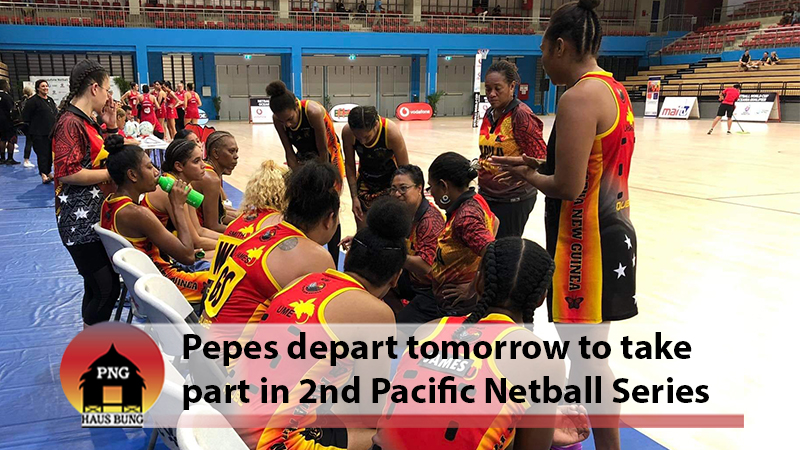 PNG PEPES SQUAD ENDORSED
PNG Pepes, our national netball team is all set to attend the 2nd Pacific Netball Series (PNS).
PNG Netball would like to thank PNG Sports Foundation through its S&C Coaches for partnering with Netball PNG in preparing this team.
Netball Australia, under the PacificAus Sports program will host these games from 13th October to 21st October 2022 in Sunshine Coast, Australia.
NPNG would also like to thank Netball Australia for creating pathways and platforms to strengthen High Performance programs.
Pepes depart our shores on Wednesday 12th October and return Saturday, 22nd October 2022.
PNG will be playing against other Pacific Nations, Fiji, Tonga and Samoa and two Australian Teams in this Series.
The Board of Netball PNG has duly endorsed the final team and wishes them well for the Series.
Published on October 11, 2022
 INCORPORATION OF NEW PORGERA LTD ADVANCES MINE RESTART
Barrick Chief Executive Mark Bristow, in PNG for quarterly operational reviews, said that the incorporation of New Porgera Limited (NPL) on 22nd September, following execution of the New Porgera Shareholders Agreement by Barrick (Niugini) Limited, Kumul Mineral Holdings Limited and Mineral Resources Enga, marked an important step towards the long delayed restart of the Porgera mine.
Once certain conditions are fulfilled, the company intends to apply for a new Special Mining Lease (SML) in coming weeks.
Bristow said that New Porgera will work with the State and the Mineral Resources Authority (MRA) to ensure that the SML application process proceeds without delay and in accordance with the Mining Act and the Porgera Project Commencement Agreement (PPCA).
“The application and early approval of a new SML is the goal that all Porgera stakeholders should be striving for.
The mine has sat idly for far too long – almost two and a half years – depriving landowners and the communities of Porgera of employment and other essential benefits that the mine delivered successfully for 30 years,” said Bristow.
Together with Barrick’s executives, Bristow arrived last night in PNG and today travelled to Porgera to kick-off the security forum alongside the Mining Minister Sir Ano Pala, Porgera MP Maso Karipe, SML and LMP landowners, community, women groups and business leaders.
Also in attendance was Enga Provincial Police Commander and representatives of the Enga Provincial Government, Porgera District and PNG Defense Force.
“We had a constructive kick-off meeting in Porgera and everyone agreed that law and order is crucial to the restart of Porgera mine and the long term future of Porgera District. The Parties will continue to meet and collaborate on law and order initiatives and their implementation. All landowner and community leaders acknowledged the urgent need for leadership at ground level to complement the work being done by security forces. There was a call from the landowners for a signing of a Peace Agreement and the need for a Government endorsed Police Operation to address the current lawlessness in Porgera” said Bristow.
As a sign of Barrick’s commitment to restart, we are building a dedicated team, comprised of a majority of Papua New Guineans, to get the mine up and running so that the people of Porgera can finally see the ‘white smoke’ they have been waiting for.
To date, Barrick and Zijin have funded USD 391 Million (approximately 1.37 billion kina) solely for Care and Maintenance.
Bristow and Barrick executives are expected to meet with Prime Minister James Marape, the State Negotiation Team led by Dari Vele, Kumul Mineral Holdings Limited and attend the inaugural board meeting of New Porgera Limited.
Published on October 11, 2022
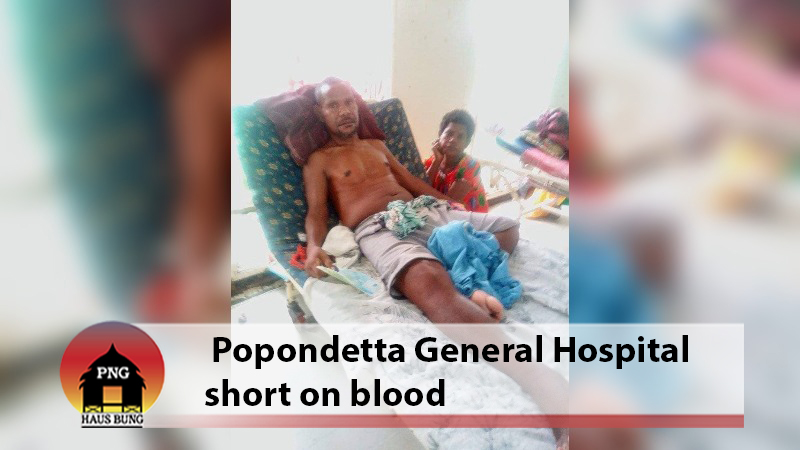 PATIENT URGENTLY NEEDS BLOOD DONATION
Lester Biama Pitaro from Northern Province was diagnosed with Filariasis of the scrotum since 2019 and has been living with this condition until now.
He is the current breadwinner for his family and due to his condition, he has left work and is unable to continue to provide.
Lester is currently admitted at the Popondetta General Hospital awaiting surgery, however his surgery cannot go ahead as he needs blood.
The hospital’s blood bank doesn’t have blood to assist with his surgery.
He is making a call to friends, families and people living in and around Popondetta town who are able to donate blood to come forward and help him.
His blood type is A and he needs at least 5 bags of blood for his surgery to go ahead.
A family member and also a patient in the same ward, Nicky Kukiva has made a post on a local forum page on social media appealing to the people in Popondetta to come forward and donate blood.
“I have received a lot of responses from people that want to come and donate blood for Lester.”
“As soon as enough donations have been received then the doctors can schedule Lester to go in for Surgery.”
Kukiva said that anyone that is able to donate can do so at the Popondetta General hospital or contact him on 72841498.
Published on October 11, 2022
 THE MISSING CONTINENT TOOK 376 YEARS TO FIND
It took scientists 375 years to discover the eighth continent of the world, which had been hiding in plain sight all along. But mysteries about the land mass still remain.
As we head towards the end of another extraordinary year, BBC Future is taking a look back at some of our favourite stories for our “Best of 2021” collection. Discover more of our picks here.
It was 1642 and Abel Tasman was on a mission. The experienced Dutch sailor, who sported a flamboyant moustache, bushy goatee and penchant for rough justice – he later tried to hang some of his crew on a drunken whim – was confident of the existence of a vast continent in the southern hemisphere, and determined to find it.
At the time, this portion of the globe was still largely mysterious to Europeans, but they had an unshakeable belief that there must be a large land mass there – pre-emptively named Terra Australis – to balance out their own continent in the North. The fixation dated back to Ancient Roman times, but only now was it going to be tested.
And so, on 14 August, Tasman set sail from his company's base in Jakarta, Indonesia, with two small ships and headed west, then south, then east, eventually ending up at the South Island of New Zealand. His first encounter with the local Māori people (who are thought to have settled there several centuries earlier) did not go well: on day two, several paddled out on a canoe, and rammed a small boat that was passing messages between the Dutch ships. Four Europeans died. Later, the Europeans fired a cannon at 11 more canoes – it’s not known what happened to their targets.
And that was the end of his mission – Tasman named the fateful location Moordenaers (Murderers) Bay, with little sense of irony, and sailed home several weeks later without even having set foot on this new land. While he believed that he had indeed discovered the great southern continent, evidently, it was hardly the commercial utopia he had envisaged. He did not return.
(By this time, Australia was already known about, but the Europeans thought it was not the legendary continent they were looking for. Later, it was named after Terra Australis when they changed their minds).
Little did Tasman know, he was right all along. There was a missing continent.
[caption id="attachment_28203" align="alignnone" width="906"] Abel Tasman arguably did find the great southern continent, though he didn’t realise 94% of it is underwater (Credit: Alamy)[/caption]
In 2017, a group of geologists hit the headlines when they announced their discovery of Zealandia –Te Riu-a-Māui in the Māori language. A vast continent of 1.89 million sq miles (4.9 million sq km) it is around six times the size of Madagascar.
Though the world's encyclopaedias, maps and search engines had been adamant that there are just seven continents for some time, the team confidently informed the world that this was wrong.
There are eight after all – and the latest addition breaks all the records, as the smallest, thinnest, and youngest in the world.
The catch is that 94% of it is underwater, with just a handful of islands, such as New Zealand, thrusting out from its oceanic depths. It had been hiding in plain sight all along.
"This is an example of how something very obvious can take a while to uncover," says Andy Tulloch, a geologist at the New Zealand Crown Research Institute GNS Science, who was part of the team that discovered Zealandia.
But this is just the beginning. Four years on and the continent is as enigmatic as ever, its secrets jealously guarded beneath 6,560 ft (2km) of water. How was it formed? What used to live there? And how long has it been underwater?
A laborious discovery
In fact, Zealandia has always been difficult to study.
More than a century after Tasman discovered New Zealand in 1642, the British map-maker James Cook was sent on a scientific voyage to the southern hemisphere. His official instructions were to observe the passing of Venus between the Earth and the Sun, in order to calculate how far away the Sun is.
[caption id="attachment_28204" align="alignnone" width="906"] Possibly due to a quirk of geology, the enigmatic kiwi bird’s closest relative hails from Madagascar (Credit: Alamy)[/caption]
But he also carried with him a sealed envelope, which he was instructed to open when he had completed the first task. This contained a top-secret mission to discover the southern continent – which he arguably sailed straight over, before reaching New Zealand.
The first real clues of Zealandia's existence were gathered by the Scottish naturalist Sir James Hector, who attended a voyage to survey a series of islands off the southern coast of New Zealand in 1895.
After studying their geology, he concluded that New Zealand is "the remnant of a mountain-chain that formed the crest of a great continental area that stretched far to the south and east, and which is now submerged…".
Despite this early breakthrough, the knowledge of a possible Zealandia remained obscure, and very little happened until the 1960s. "Things happen pretty slowly in this field," says Nick Mortimer, a geologist at GNS Science who led the 2017 study.
Then in the 1960s, geologists finally agreed on a definition of what a continent is – broadly, a geological area with a high elevation, wide variety of rocks, and a thick crust.
It also has to be big. "You just can't be a tiny piece," says Mortimer. This gave geologists something to work with – if they could collect the evidence, they could prove that the eighth continent was real.
Still, the mission stalled – discovering a continent is tricky and expensive, and Mortimer points out that there was no urgency. Then in 1995, the American geophysicist Bruce Luyendyk again described the region as a continent and suggested calling it Zealandia. From there, Tulloch describes its discovery as an exponential curve.
[caption id="attachment_28205" align="alignnone" width="949"] Tasman’s ships left New Zealand after a bloody encounter with the Māori people – but he believed that he had found the legendary southern continent (Credit: Alamy)[/caption]
Around the same time, the "United Nations Convention on the Law of the Sea" came into force, and finally provided some serious motivation. It states that countries can extend their legal territories beyond their Exclusive Economic Zone, which reaches 200 nautical miles (370km) out from their coastlines, to claim their "extended continental shelf" – with all the mineral riches and oil this encompasses.
If New Zealand could prove that it was part of a larger continent, it could increase its territory by six times. Suddenly there was an abundance of funding for trips to survey the area, and the evidence gradually built up. With every rock sample that was collected, the case for Zealandia improved.
The final flourish came from satellite data, which can be used to track tiny variations in the Earth's gravity across different parts of the crust to map the seafloor.
With this technology, Zealandia is clearly visible as a misshapen mass almost as large as Australia.
When the continent was finally unveiled to the world, it unlocked one of the most sizeable maritime territories in the world. "It is kind of cool," says Mortimer, "If you think about it, every continent on the planet has different countries on it, [but] there are only three territories on Zealandia."
In addition to New Zealand, the continent encompasses the island of New Caledonia – a French colony famous for its dazzling lagoons – and the tiny Australian territories of Lord Howe Island and Ball's Pyramid. The latter was described by one 18th-Century explorer as appearing "not to be larger than a boat."
A mysterious stretching
Zealandia was originally part of the ancient supercontinent of Gondwana, which was formed about 550 million years ago and essentially lumped together all the land in the southern hemisphere. It occupied a corner on the eastern side, where it bordered several others, including half of West Antarctica and all of eastern Australia.
Then around 105 million years ago, "due to a process which we don't completely understand yet, Zealandia started to be pulled away", says Tulloch.
Continental crust is usually around 40km deep – significantly thicker than oceanic crust, which tends to be around 10km. As it was strained, Zealandia ended up being stretched so much that its crust now only extends 20km (12.4 miles) down. Eventually, the wafter-thin continent sank – though not quite to the level of normal oceanic crust – and disappeared under the sea.
Despite being thin and submerged, geologists know that Zealandia is a continent because of the kinds of rocks found there. Continental crust tends to be made up of igneous, metamorphic and sedimentary rocks – like granite, schist and limestone, while the ocean floor is usually just made of igneous ones such as basalt.
[caption id="attachment_28206" align="alignnone" width="906"] When the supercontinent of Gondwana broke up, fragments drifted all across the globe. Many of its ancient plants still live in the Australian Dorrigo forest (Credit: Getty Images)[/caption]
But there are still many unknowns. The unusual origins of the eighth continent make it particularly intriguing to geologists, and more than a little baffling. For example, it's still not clear how Zealandia managed to stay together when it's so thin and not disintegrate into tiny micro-continents.
Another mystery is exactly when Zealandia ended up underwater – and whether it has ever, in fact, consisted of dry land.
The parts that are currently above sea level are ridges that formed as the Pacific and Australian tectonic plates crumpled together. Tulloch says opinion is split as to whether it was always submerged apart from a few small islands, or once entirely dry land.
This also raises the question of what lived there.
With its mild climate and 39 million-sq-mile (101 million-sq-km) range, Gondwana itself was home to a vast array of flora and fauna, including the first four-limbed land animals and later, an abundance of the largest to ever live – the titanosaurs. So, could the rocks of Zealandia be studded with their preserved remains?
A debate about dinosaurs
Fossilised land animals are rare in the southern hemisphere, but the remains of several were found in New Zealand in the 1990s, including the rib bone of a giant, long-tailed, long-necked dinosaur (a sauropod), a beaky herbivorous dinosaur (a hypsilophodont) and an armoured dinosaur (an ankylosaur). Then in 2006, the foot bone of a large carnivore, possibly a kind of allosaur, was discovered in the Chatham Islands, about 500 miles (800km) east of the South Island. Crucially, the fossils all date to after the continent of Zealandia split from Gondwana.
However, this doesn't necessarily mean there were dinosaurs roaming over the majority of Zealandia – these islands may have been sanctuaries while the rest was drowned, as it is now.
"There's a long debate about this, about whether it's possible to have land animals without continuous land – and whether without it, they would have been snuffed out," says Rupert Sutherland, a Professor of Geophysics and Tectonics at the Victoria University of Wellington.
The plot thickens with one of New Zealand's weirdest and most beloved inhabitants, the kiwi – a dumpy, flightless bird with whiskers and hair-like feathers.
Oddly, its closest relative is not thought to be the Moa, which is part of the same group – the ratites – and lived on the same island until its extinction 500 years ago, but the even-more giant elephant bird, which stalked the forests of Madagascar until as recently as 800 years ago.
The finding has led scientists to believe that both birds evolved from a common ancestor that lived on Gondwana. It took 130 million years to fully break up, but when it did, it left behind fragments which have since been scattered all across the globe, forming South America, Africa, Madagascar, Antarctica, Australia, the Arabian Peninsula, the Indian Subcontinent, and Zealandia.
This, in turn, suggests that at least part of now-submerged Zealandia has remained above sea level the whole time. Except around 25 million years ago the entire continent – even possibly the entirety of New Zealand – is thought to have been plunged underwater. "It was thought that all the plants and animals must have colonised afterwards," says Sutherland. So what happened?
[caption id="attachment_28208" align="alignnone" width="906"] Satellite data can be used to visualise the continent of Zealandia, which appears as a pale blue upside-down triangle to the east of Australia (Credit: GNS Science)[/caption]
When the continent was finally unveiled to the world, it unlocked one of the most sizeable maritime territories in the world. "It is kind of cool," says Mortimer, "If you think about it, every continent on the planet has different countries on it, [but] there are only three territories on Zealandia."
In addition to New Zealand, the continent encompasses the island of New Caledonia – a French colony famous for its dazzling lagoons – and the tiny Australian territories of Lord Howe Island and Ball's Pyramid. The latter was described by one 18th-Century explorer as appearing "not to be larger than a boat."
A mysterious stretching
Zealandia was originally part of the ancient supercontinent of Gondwana, which was formed about 550 million years ago and essentially lumped together all the land in the southern hemisphere. It occupied a corner on the eastern side, where it bordered several others, including half of West Antarctica and all of eastern Australia.
Then around 105 million years ago, "due to a process which we don't completely understand yet, Zealandia started to be pulled away", says Tulloch.
Continental crust is usually around 40km deep – significantly thicker than oceanic crust, which tends to be around 10km.
As it was strained, Zealandia ended up being stretched so much that its crust now only extends 20km (12.4 miles) down. Eventually, the wafter-thin continent sank – though not quite to the level of normal oceanic crust – and disappeared under the sea.
Despite being thin and submerged, geologists know that Zealandia is a continent because of the kinds of rocks found there.
Continental crust tends to be made up of igneous, metamorphic and sedimentary rocks – like granite, schist and limestone, while the ocean floor is usually just made of igneous ones such as basalt.
Though it's not possible to collect fossils from the seafloor of Zealandia directly, scientists have been plumbing its depths by drilling. "Actually the most helpful and distinctive fossils are the ones which form in the very shallow seas," says Sutherland. "Because they leave a record – there are zillions and zillions of tiny, tiny little fossils that are very distinctive."
In 2017, a team undertook the most extensive surveys of the region so far, and drilled more than 4,101ft (1,250m) into the seabed at six different sites. The cores that they collected contained pollen from land plants, as well as spores and the shells of organisms that lived in warm, shallow seas.
"If you have water, which is only you know, 10m (33ft) deep or something like this, then there's a good chance that there was land around as well," says Sutherland, who explains that the pollen and spores also hint at the possibility that Zealandia was not quite as submerged as was thought.
A (literal) twist
Another lingering mystery can be found in Zealandia's shape.
"If you look at a geological map of New Zealand, there are two things that really stand out," says Sutherland. One of these is Alpine Fault, a plate boundary that runs along the South Island and is so significant, it can be seen from space.
The second is that the geology of New Zealand – as well as that of the wider continent – is oddly bent. Both are split in two by a horizontal line, which is where the Pacific and Australian tectonic plates meet.
At this exact point, it looks like someone has taken the lower half and twisted it away, so that not only do the previously-continuous ribbons of rock no longer line up, but they are almost at right angles.
An easy explanation for this is that the tectonic plates moved, and somehow deformed them out of shape. But exactly how or when this happened is still totally unresolved.
"There are various interpretations, but this is quite a large unknown thing," says Tulloch.
Sutherland explains that the continent is unlikely to give up all its secrets anytime soon. "It's quite hard to make discoveries, when everything is 2km (1.2 miles) underwater, and the layers that you need to sample are 500m (1,640ft) beneath the seabed as well," he says.
"It's really challenging to go out and explore a continent like that. So, it just takes a lot of time, money and effort to go out and ships and survey regions."
If nothing else, the world's eighth continent surely shows that – nearly 400 years after Tasman's quest – there is still plenty to be discovered.
Source: BBC.com
Published on October 10, 2022
DEADLY LANDSLIDES SWEEP AWAY HOMES IN VENEZUELA
Deadly landslides have swept away homes in Venezuela's Las Tejerias city, south of the capital Caracas.
At least 22 people have been reported dead, and a further 52 are missing after the torrential rainfall caused by La Niña weather pattern.
Vice President Delcy Rodriguez visited one of the worst-affected areas on Sunday. Rescue services are working to find those still missing, she said.
President Nicolas Maduro described the situation as "difficult and painful".
About 1,000 emergency personnel were taking part in search and rescue operations, deputy civil protection minister Carlos Perez Ampueda added.
The landslides happened after the El Pato river burst its banks, and the resulting floodwaters swept away several houses and shops.
Carmen Melendez, a 55-year-old local, told AFP: "The village is lost. Las Tejerias is lost."
Las Tejerias, which is some 67km (42 miles) from Caracas, has been hit the hardest in Venezuela by this year's La Niña weather pattern.
La Niña is a naturally-occurring event, which involves a cooling of the Pacific Ocean and usually brings wetter conditions to Asia, Africa and Latin America.
Source: BBC
Published on October 10, 2022
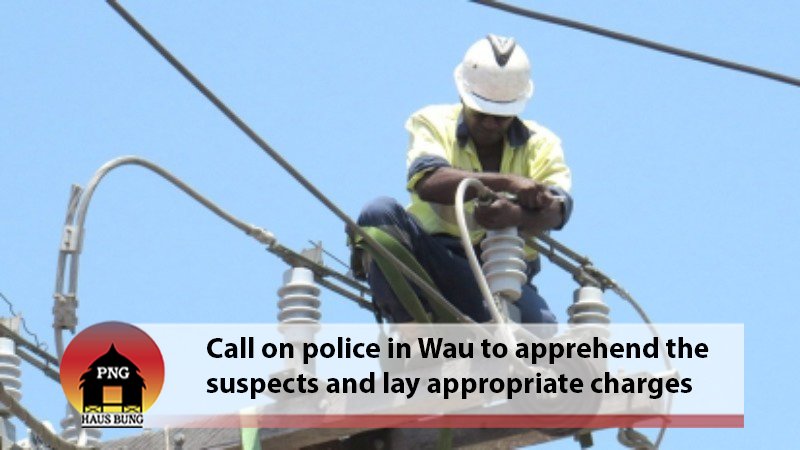 PPL CEO LASHES OUT ON AN ASSAULT CASE OF AN OFFICER
The Chief Executive Officer (CEO) of PNG Power Mr. Obed Batia has condemned the attack on a PNG Power Limited (PPL) employee during the weekend at Wandumi bridge in Wau, Morobe Province.
The assault occurred while the officer was attending to his routine job.
Mr. Batia stressed that similar incidents have occurred to his officers on several occasions and that wasn’t the first time.
“If power users or customers and clients are upset about any power issues or blackouts, they should report in a proper manner to the right forum rather than resorting to violence. Power blackouts and adversities do occur and it’s not by employees. Our job is to fix the problem and to maintain reliability at all cost,” the CEO said.
“My officers put their lives on the line to rectify problems. They work day and night ensuring power comes back,” Mr. Batia said.
“Imagine of a power line that felled by landslide, bushfires, fallen trees or so at wherever distances. PPL employees are there doing the hard-yards to restore power even in bad weather, night or in the hot sun,” the CEO said.
Mr. Batia has called on the police in Wau to apprehend the suspects and lay appropriate charges.
The CEO has lashed his frustration after an assault case reported on yesterday’s (Monday’s) Post-Courier, news.
Published on October 10, 2022
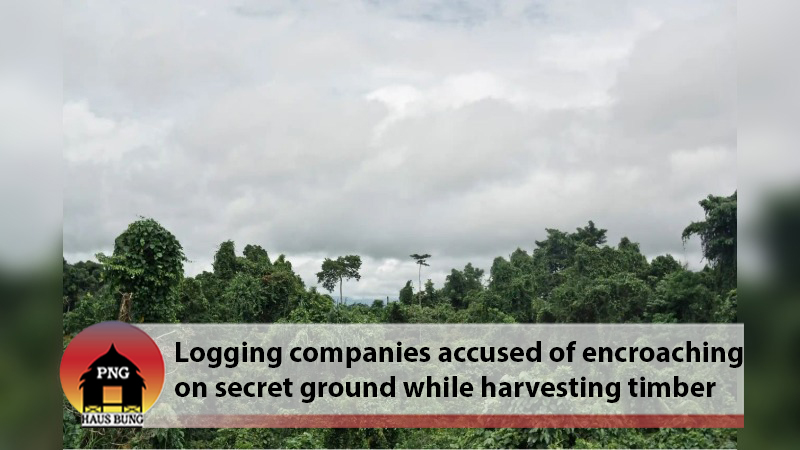 FIGHTING OFF THE BULLDOZERS IN THE KWILA FORESTS OF PNG
Villagers are pushing back against logging operations they say are encroaching on designated conservation areas.
In mid-May, a bulldozer began clearing a logging road into an area of largely untouched rainforest near the village of Suburam, on Papua New Guinea’s north coast, between the mountains of the Adelbert Range and the Bismarck Sea.
Towering kwila trees were among those locals say were felled by loggers. This is a coveted, high-value species that yields the rich red timber familiar in Australia as merbau.
Landowners in the area say these trees are historically never cut down by them. They are considered ancestors, and the local Tivia clan say they only use the hardwood when the trees are “given”, falling naturally. Tivia means “blood”, Lawrance Omben, a clan leader from Arenduk village explains: “Blood because it is red – the tree sap is red.”
Locals say the bulldozer felled 18 kwila and 100 mixed hardwoods.
They say the bulldozer also levelled a sacred area – a matmat, the burial site for five generations of chiefs from three clans, surrounded by tall kwila that were the daughters of the clan’s mother tree.
“Our belief is that when the masalai [spirits] … touch that sap, [humans] come out from that,” says another Tivia member, Bryan Lavate. “It is the creation of our clan.”
When one of the local chiefs heard what had occurred, he says he lay down in his hut grief-stricken, and stayed there for days.
[caption id="attachment_28187" align="alignnone" width="592"] Papua New Guinea landowners fight against logging –[/caption]
Others ordered the young men of the clans not to retaliate with violence. Instead, on 19 May Lavate, the secretary of a collective of local clans known as the Yikmol Landowners Association, was dispatched with a letter advising the loggers they had caused damage to the external border of a designated conservation area, that they had no right to be there and should withdraw immediately. And they did.
Sandu Ovot, a chief from Suburam whose great-grandfather was buried in the matmat levelled by the loggers, explains that kwila timber is imbued with spiritual powers, providing medicines and digging sticks for planting garden crops. Logs are only used for building when they are given – when trees or branches fall naturally. They are then also transformed into weapons that hold the strength of ancestors.
Omben, the chief from neighbouring Arenduk village, says that since the letter to the loggers at Suburam in May, the logging crews have moved away.
[caption id="attachment_28189" align="alignnone" width="775"] Bryan Lavate and Sandu Ovot, a chief from Suburam, whose great-grandfather was buried in the matmat he says was levelled by the loggers. Photograph: Supplied[/caption]
Meanwhile the Tivia landowners say they have been struggling with the fallout. Because the landscape of their creation story has been desecrated, and the remains of the chiefs of three clans disturbed, it has damaged people’s physical and mental health, says Lavate.
But the Tivia have continued to fight back, seeking justice of some kind, although Lavate says their loss can never be compensated. And so it is that when they hear a reporter from the Guardian is in Madang town, a delegation of 21 men, including seven chiefs, walk hours overnight to catch a ride into town and tell their story.
‘For us, forest is life’
Dubious – in some cases illegal – incursions by loggers into forests across the country are so common as to be unremarkable, according to Peter Bosip, executive director of PNG’s Centre for Environmental Law and Community Rights (Celcor).
“In most cases in PNG there is no such thing as due diligence, so the PNG Forest Authority will just go ahead and accept whatever application that is brought by the loggers.”
He says he hears countless variations of the Tivia clan’s story – far more than his stretched team of advocates can ever take up. As extraordinary as it is, what happened in the forest near Suburam in Sumkar district appears to be an all-too-ordinary reflection of the realities playing out as global corporations push deeper into the world’s third-largest remaining rainforest.
Just three weeks before the bulldozers arrived, Suburam village had been the site of a 20-clan, five-pig feast and extravaganza, as the community celebrated the creation of a conservation area covering nearly 10,000 hectares of forest.
Hundreds of locals were joined by guests representing the partnerships supporting the conservation project – Australia’s Dfat, USAID, the World Conservation Society, PNG’s MiBank and Kamapim, a local sustainable agriculture project that has helped village farmers produce vanilla beans of such quality they are sought out by European chocolatiers.
“The thing about vanilla is that you can grow it, make it, and it’s easy work without cutting your rainforest down, and so we can do conservation, and we can have livelihoods with vanilla,” says Lavate, who represents about 4,000 people across two language groups involved in the project.
For decades, forest communities in PNG have fallen back on selling their trees as one of the only ways to earn income in a country where basic services are scarce and households struggle to cover school fees. It has rendered communities vulnerable to exploitative deals. Loggers are offering 35 kina (about $US10) a cubic metre for prized kwila trees, but often pay less, locals say. These same trees often sell in China for $US500 a cubic metre, according to a 2021 PNG government report.
Rather than sell their trees, Lavate and other landowners are trying to safeguard them for future generations, negotiating fraught clan politics, agreeing terms and mapping boundaries for a patchwork of locally controlled conservation areas.
All this action has unfolded remarkably quickly by PNG timelines – within two years. In a nation notionally still almost entirely held under customary ownership, wrangling over land use can take years with no resolution.
“We’re not rich people,” says Lavate. “We’re not the kind of people who can pay for water, pay for our food, pay for housing. We get these things from our forest. So for us, forest is life.”
‘They feel intimidated, they feel suppressed’
According to mapping done by locals and seen by the Guardian, the logging crew that arrived near Suburam in May carved their road hard along the boundary of the new Yikmol conservation area, despite regulations requiring a 100 metre buffer zone around protected areas, before pushing inside it at least once. Perhaps they were unaware of the new conservation area, or unpersuaded of its authority.
The paperwork formalising the new conservation area could not be lodged with provincial authorities because they were on a protracted strike. Meanwhile, legislation enshrining new protected areas across PNG has been stuck by political inaction for years.
But there are also questions around what rights the Malaysian-owned logging company, Woodbank Pacific Limited, had to be operating in the area at all. The company has not responded to questions, and neither has the PNG Forest Authority.
It appears from log export data that Woodbank’s activities in this region of Madang province rely on colonial era logging concessions called timber rights purchases, or TRPs, that expired decades ago. Created in 1951, these provided a mechanism to purchase timber rights from customary owners and control the harvesting.
The Yikmol landowners delegation is adamant that the company had not been given consent to be working near or within the conservation area or the matmat. “The logging company didn’t ask us landowners,” Lavate says. “We did not have an agreement with the logging company that they could come on our land but they came in anyway.”
In a soon-to-be-published analysis for the ANU Development Policy Centre drawing on 40 years of insight and data, veteran PNG forestry expert Prof Colin Filer observes that outdated TRPs have produced more log exports than any other type of licence for the clearing of PNG forests, and that almost two-thirds of exports in the past three years have come from areas where TRP agreements have expired.
Filer argues these operations are all illegal, citing a 2017 PNG state solicitor’s opinion which came to a similar conclusion.
Celcor’s Peter Bosip argues that if the licences are not valid, then loggers who use them should be held accountable.
But he has concerns about enforceability, speaking generally and not about Woodbank, “Even when there is a court order stopping them … the court is in Port Moresby. The logger in the remote location doesn’t really tend to recognise what the court says, and keeps on cutting down trees, and this has been an ongoing issue here.”
Bosip has broader concerns about the potential for corruption in the industry, saying that government officers, elected officials, from top to bottom, “might accept [a] bribe and say OK, everything is in order and issue the logging permit”, says Bosip. Again speaking generally and not about the logging near Suburam he says that if some loggers have paid police to escort them on site, landowners “might get caught by surprise, and the police go in with arms and threaten them – if you want to dispute the logging company, go to court. They realise they don’t have the money to get legal assistance. They feel intimidated, they feel suppressed, but how can they speak?”
What’s missing, says Paul Barker, executive director of PNG thinktank the Institute of National Affairs, speaking generally, is a commitment to the principle of adherence to law. “There is big money to be made out of this.”
This is shaping as a particularly dangerous moment for PNG’s forests, Barker warns, not least because of the growing global momentum to save the country’s vast, vanishing, wildly diverse landscape as the climate emergency escalates. Speculation around lucrative carbon markets is attracting some genuine players but also unscrupulous “carbon cowboys”. The PNG government declared at Cop26 in Glasgow last November that it would ban log exports in 2025 and end all logging by 2030.
Similarly welcome promises have been made and delayed for 15 years, and while cynics anticipate they may well be pushed out again, loggers are nonetheless “under pressure to extract as many bloody logs as they can over the next two or three years”, says Prof Filer.
“Logging companies are realising they need to move fast just in case some of these carbon agreements, or even biodiversity agreements, actually do get established,” says Barker.
Source: The Guardian.com
Published on October 10, 2022