

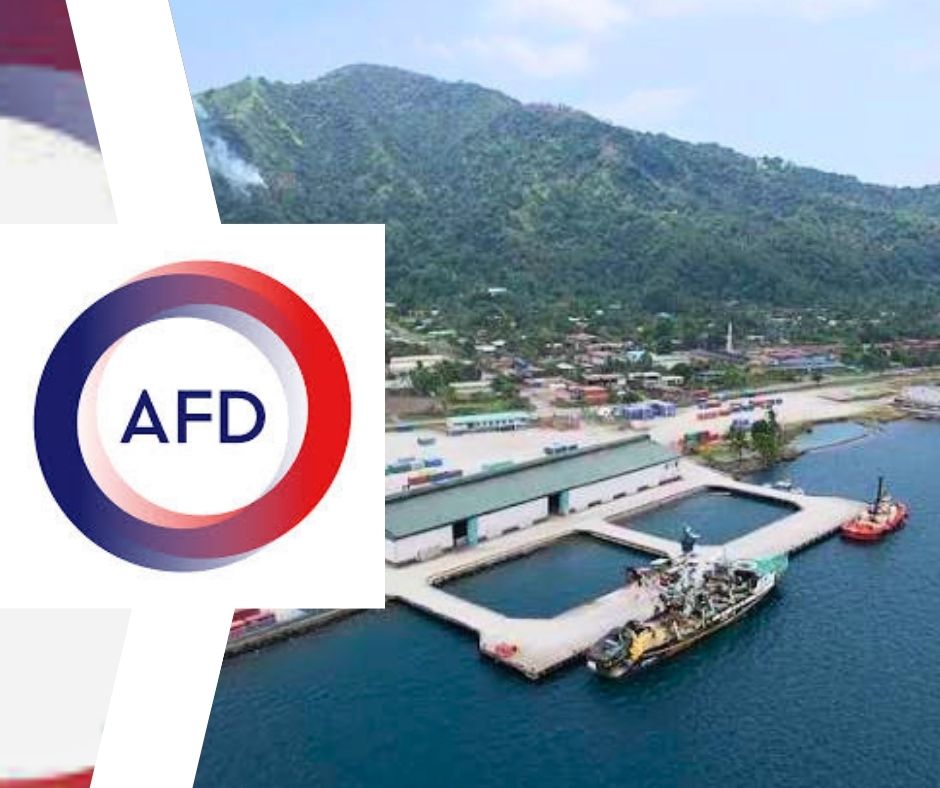
A redevelopment project valued at more than €80 million (over K400 million) is now in the works to transform Rabaul into what could become the Pacific Islands’ first green port.
The project is being led by the Agence Française de Développement (AFD) commonly known as the French Development Agency.
in partnership with the European Union and the European Investment Bank as part of broader efforts to strengthen climate-resilient infrastructure and sustainable investment in PNG.
Speaking during the recently held 2nd Green Finance Summit 2026, ADF Country Representative Mr. Benoît Chassatte said the redevelopment of the Port of Rabaul forms one of AFD’s major sustainable infrastructure priorities in the country.
“The ambition is to transform the Port of Rabaul into the first green port in the pacific island countries,” Chassatte said.
The project is expected to focus on climate resilience, environmental sustainability and modernization of port infrastructure in East New Britain.
Chassatte said the Pacific region remains among the areas most vulnerable to climate change, particularly low-lying island communities threatened by rising sea levels.
“These islands are extremely low-lying and vulnerable to sea-level rise. Entire communities could eventually disappear from the map if nothing is done. This is why adaptation is not optional. It is a priority,” he said.
He said while there is already a large pipeline of green investment opportunities across the Pacific, investor confidence and financing risks continue to slow implementation.
“At the end of the day, investors focus on profitability, return on investment, collateral and risk management,” Chassatte said while adding that money follows confidence.
To help address those barriers, AFD has been working closely with the Bank of Papua New Guinea and the Green Finance Centre over the last two years to establish financing mechanisms designed to unlock green investment.
One of the initiatives is the Green Refinancing Facility, which aims to provide concessional financing for green projects.
Another is the Green Guarantee Facility, which was officially signed during the summit and is designed to reduce lending risks for banks financing environmentally sustainable projects.
“We believe these two facilities can help unlock green investments in Papua New Guinea,” Chassatte said.
He also praised the leadership shown by Bank of Papua New Guinea Governor Elizabeth Genia in driving the country’s green finance agenda.
“Over the years, she has taken ownership of this initiative and continues to demonstrate strong commitment and passion for the issue,” he said.
“That level of leadership is essential if these initiatives are going to succeed.”
Beyond the Rabaul redevelopment project, AFD is also supporting renewable energy, biodiversity conservation and climate resilience programs across PNG.
This includes a €20 million conservation initiative focused on forest and marine protection, renewable energy cooperation projects with PNG Power Ltd, and regional climate adaptation programs under the Kiwa Initiative.
Chassatte said strong partnerships between governments, financial institutions, development agencies and the private sector would be critical to unlocking larger-scale sustainable investment opportunities across the country.
“The motivation is there. The capacity is there. The momentum is there,” he said.