

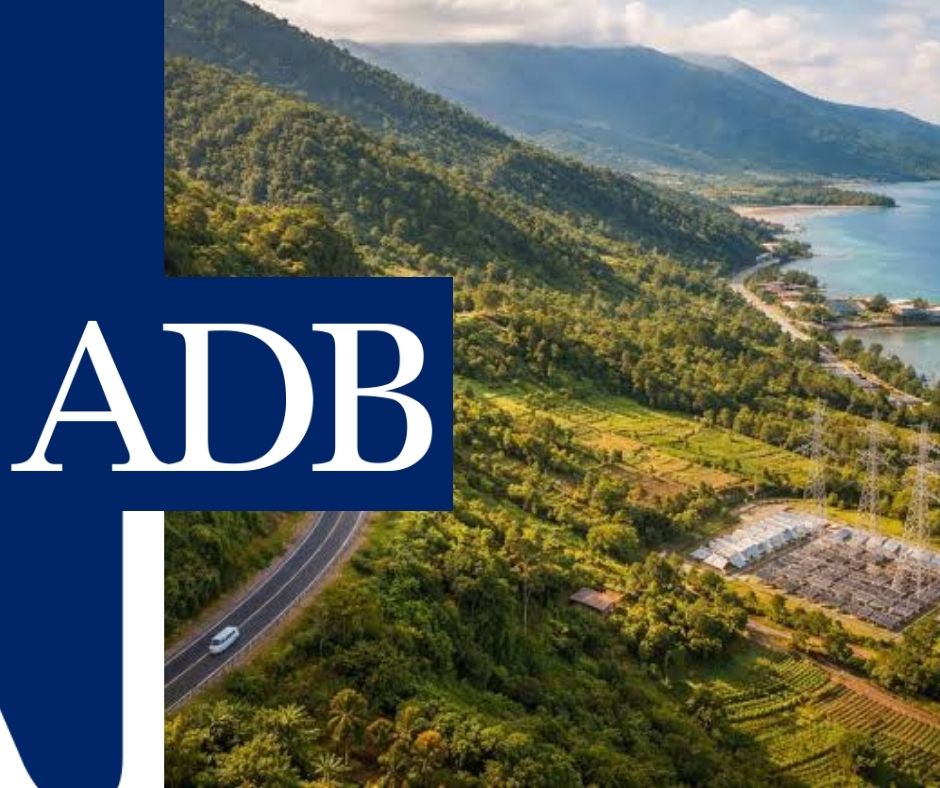
The Asian Development Bank (ADB) continues to work to improve infrastructure investment strategy in PNG while focusing on climate resilience, national connectivity and creating stronger conditions for private sector growth.
Speaking during the recent 2nd Green Finance Summit, Mr. Soon Chan Hong, ADB Country Operations Head for PNG said infrastructure investments must now be designed with long-term climate risks in mind to ensure projects remain sustainable for decades.
“Infrastructure is not easy to change once we make an investment,” he said.
“Minimum 20 years, 30 years, maybe 50 years infrastructure will be there, so once we make a wrong choice at the start, at the design, then we are stuck.”
Hong said ADB currently operates across eight sectors in PNG, including transport, energy, urban and rural development, finance, public sector management and social development.
He explained that the bank’s work combines both “hard infrastructure” such as roads, airports and power systems, alongside “soft infrastructure” including policy support, governance reforms and technical assistance.
According to Hong, ADB’s active project portfolio in PNG is valued at around US$1.5 billion across multiple sectors, with infrastructure projects making up the majority of investments.
He said around 60 percent of ADB’s portfolio is concentrated in the transport sector, including roads and civil aviation projects, while another significant portion focuses on energy infrastructure.
Among the major projects highlighted were the Highlands Highway Project, Civil Aviation Development programs and Hydropower Rehabilitation and Electricity Distribution upgrades.
“When there is a road, when there is better air connectivity or reliable power supply, people get benefit because residential, commercial and other businesses can grow,” Hong said.
“Basically, we provide the environment for private sector development.”
Hong said climate resilience is now being integrated directly into project design and infrastructure planning because investments made today will shape the country’s future for decades.
He said ADB is assessing climate risks during the planning stage to ensure infrastructure can withstand future environmental pressures and avoid locking PNG into vulnerable systems.
“With regard to resilience and sustainable investment, clearly we look into the impact of climate change and then how our investment can lock in more sustainable development,” he said.
ADB is also supporting road maintenance reforms and updated infrastructure standards aimed at improving climate resilience across transport networks.
Hong said infrastructure development alone is not enough and must also be supported by stronger governance systems, policy reforms and private sector participation.
The bank is also working with development partners including the World Bank, International Monetary Fund and other agencies to support policy reforms and improve the investment environment in PNG.
ADB has also implemented technical assistance programs supporting private sector development with assistance from the Australian and New Zealand governments.
Hong said partnerships remain critical because no single institution can deliver large-scale infrastructure transformation alone.
“We have limited resources and limited number of people, so we have to be very efficient,” he said.
“The national priorities clearly become one of the very important criteria when we discuss and design projects.”
ADB says its long-term approach in PNG is focused on building resilient infrastructure systems that improve connectivity, strengthen economic growth and create better conditions for private sector investment across the country.